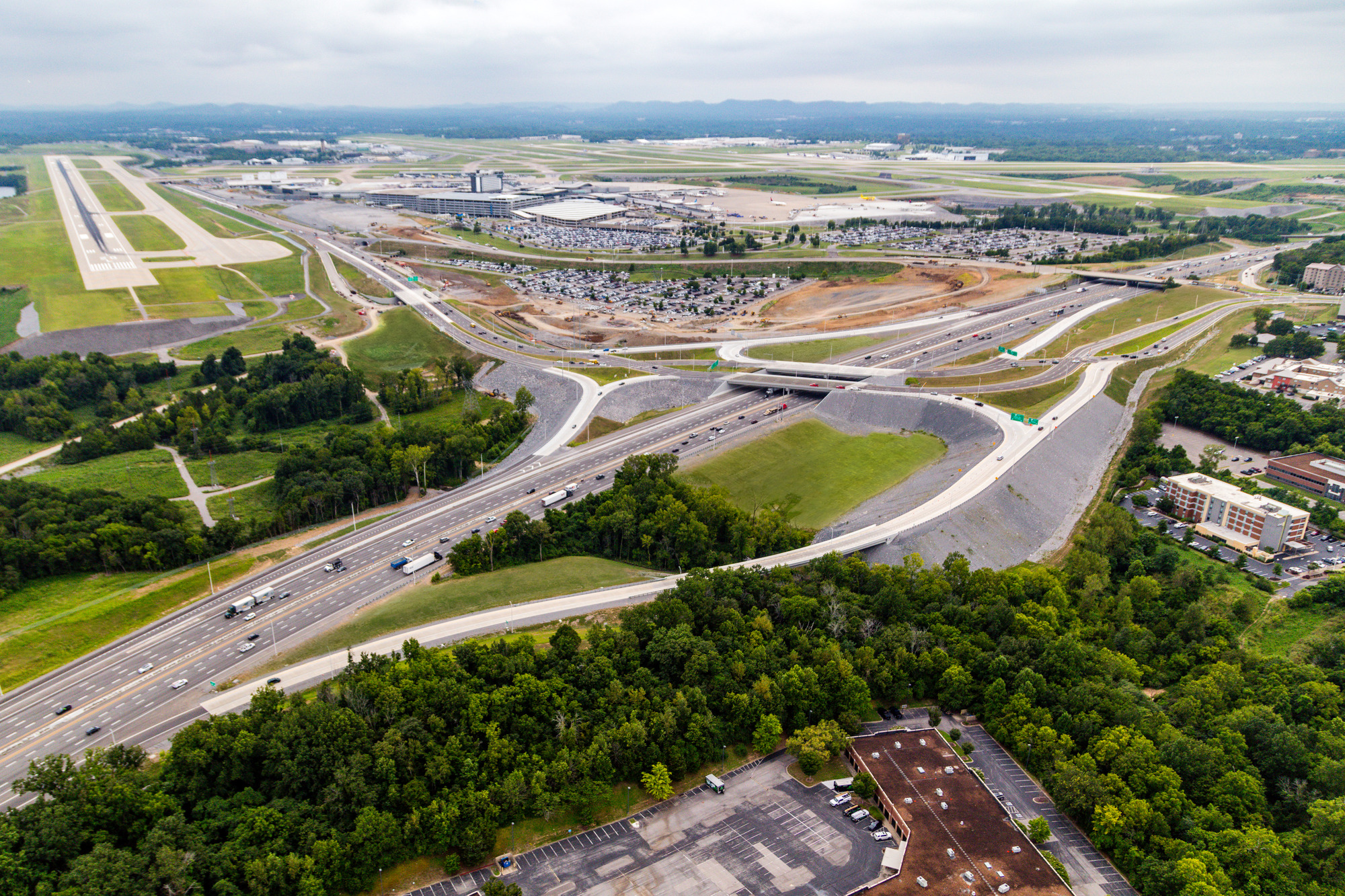
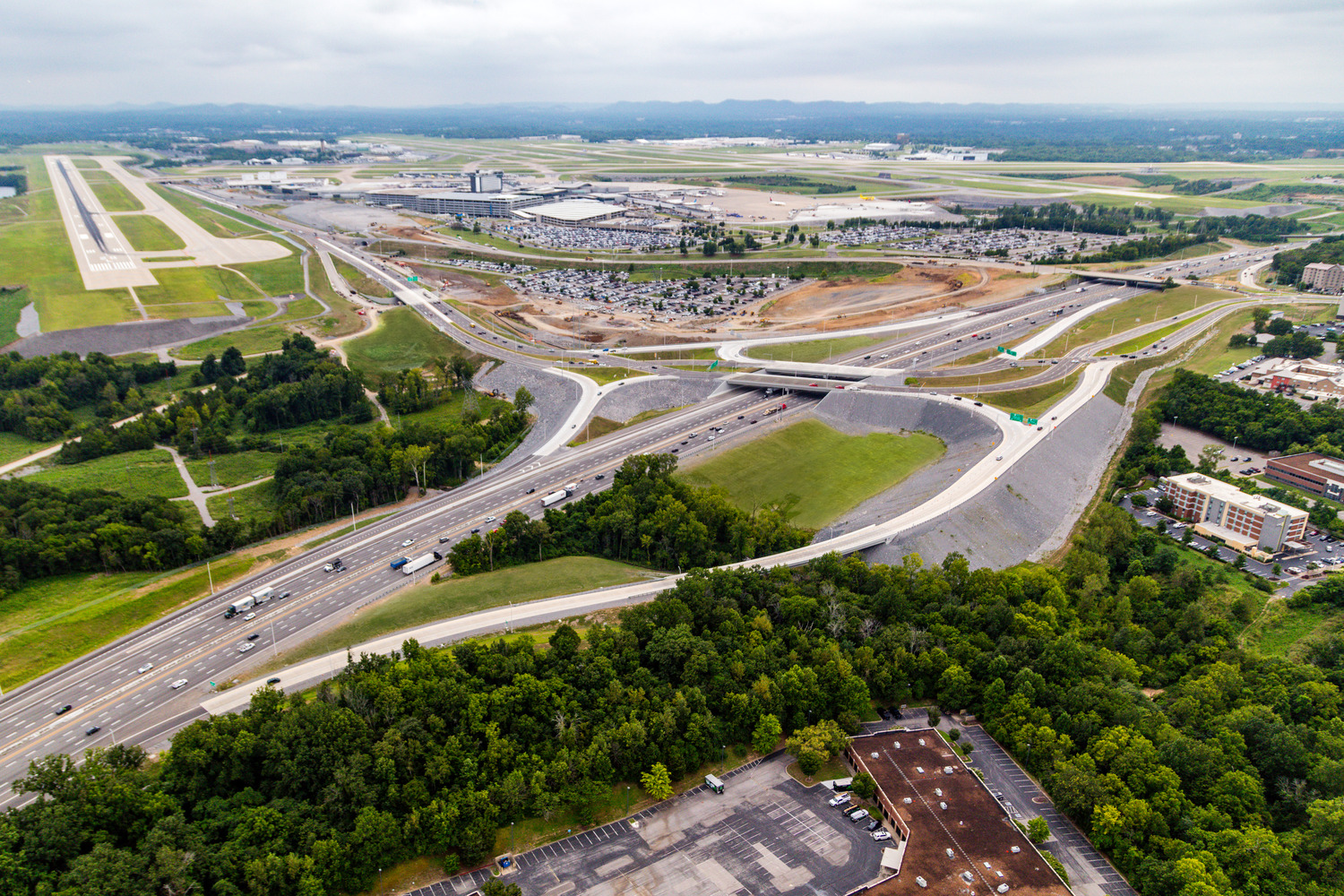
The existing I-40 interchange at Donelson Pike was originally built in the 1980’s to provide access to a new airport terminal. BNA has been a major contributor to the rapid growth of the area, generating high volumes of both cargo and passenger traffic. During peak hours, the former interchange suffered from heavy congestion and delays. To address these challenges, our team proposed a diverging diamond solution, which over time is expected to lead to projected safety benefits including a 33% reduction in crashes on Donelson Pike and a 7% reduction on I-40.
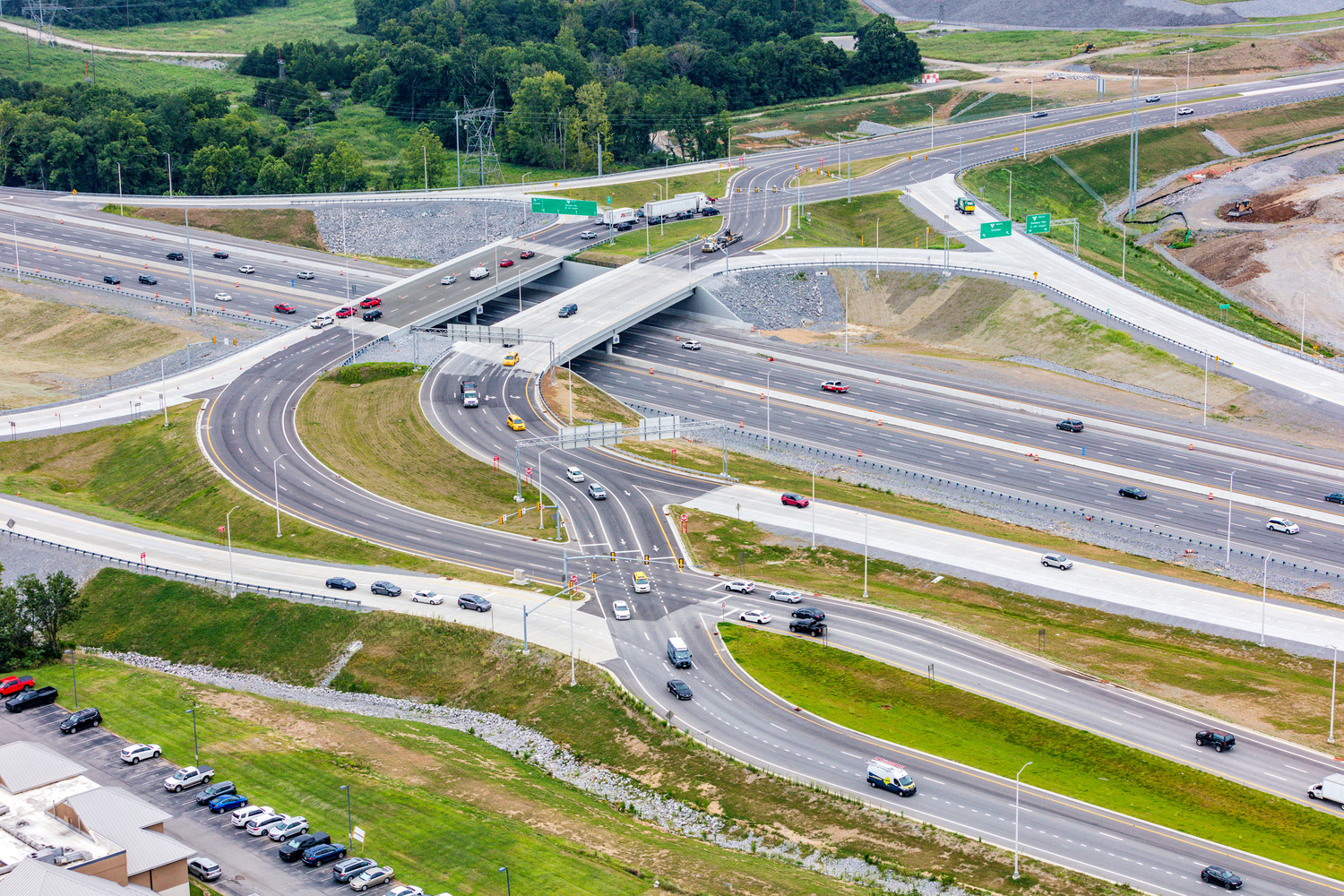
The new interchange, constructed with a complex DDI design, also relocated Donelson Pike to the east of the existing roadway. Today, the reconfigured roadway provides two to three lanes in each direction, with exit ramps diverging from through lanes and entrance ramps merging seamlessly. Two signalized intersections have been added at either end of the overpass to manage traffic movements. Additionally, four bridges were built: one north of I‑40 serving as the new westbound off‑ramp; the main dual bridges spanning I‑40 as part of the DDI; and another to the south, creating access in and out of BNA.
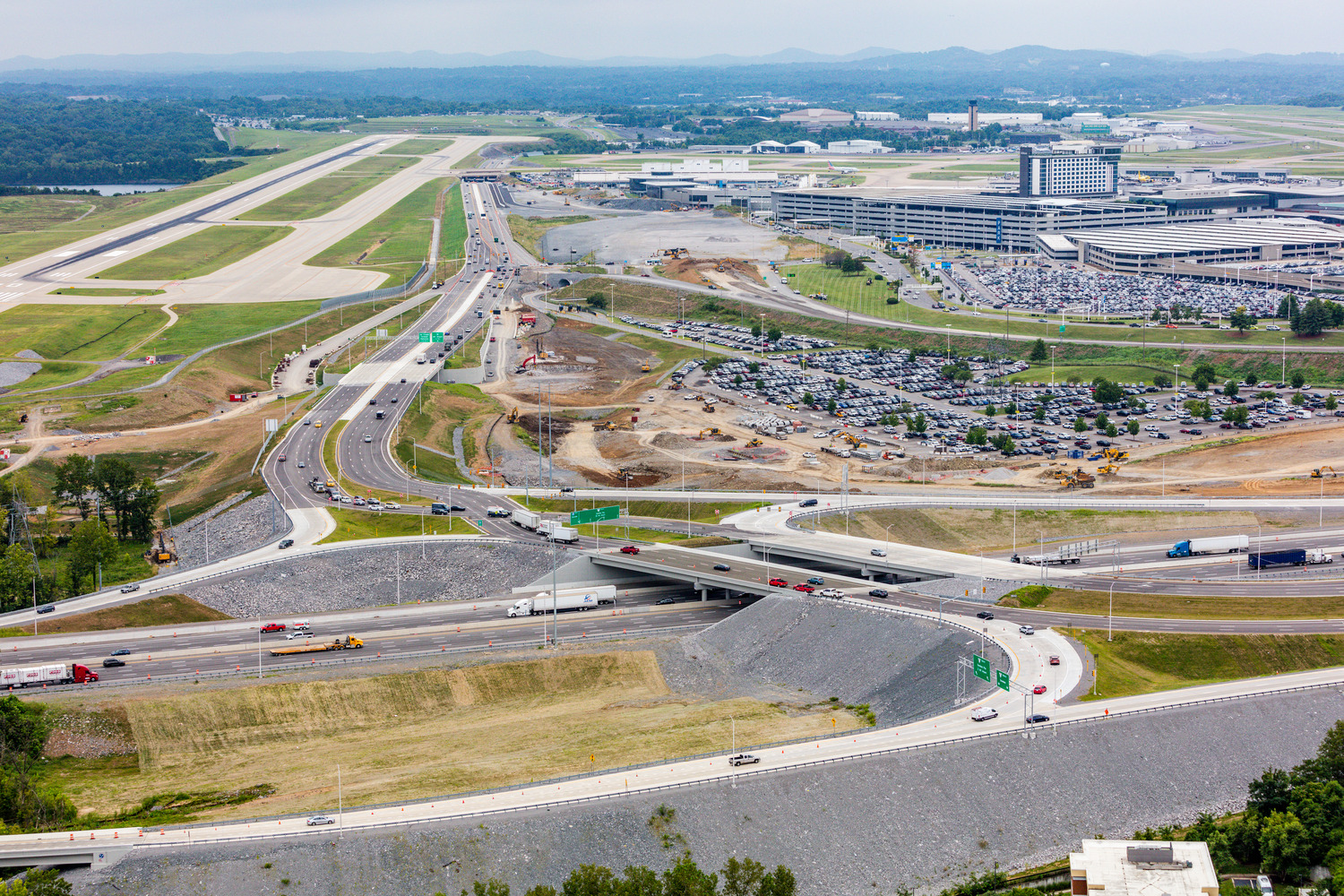
Designing a new interchange next to a fully operational international airport meant coordinating with the FAA, Air Traffic Control, and multiple stakeholders. The roadway alignment had to be geometrically precise: horizontal offsets to accommodate aircraft classifications, strict vertical controls to protect runway airspace, and line-of-sight studies to ensure no signage or traffic movement would interfere with critical air traffic control tower operations.
The project also involved an extraordinary level of utility complexity. Early planning identified potential schedule risks tied to relocation of TVA transmission towers, Colonial Pipeline petroleum lines, and communication infrastructure serving BNA.

The project was delivered on an extremely accelerated timeline. Because of the importance and the immense need for the project, the airport authority agreed to pay $6 million in incentives to the contractor for completing the project a year ahead of schedule. Ultimately, the project opened approximately 13 months ahead of schedule.