
Environmental, Social & Governance
Our ESG Framework
Our approach to ESG provides a cohesive framework for measuring and communicating our impact as an organization— particularly as it applies to our people, our clients, our consultants, the communities we serve, and the world at large. Environmental considerations take into account how we perform as stewards of our planet; social criteria encompass our relationship with, and impact on, employees, suppliers, clients and communities; while governance focuses on, among other aspects, our leadership, succession planning and internal controls. ESG also provides a unified foundation for communicating the key considerations and actions that align with our Core Purpose, our Core Values and our brand promise of Genuine Ingenuity.
Gresham Smith is Carbon Neutral
We’re proud to be carbon neutral for our business operations, and we look forward to continuing to calculate and offset our carbon footprint on an annual basis.

Environmental
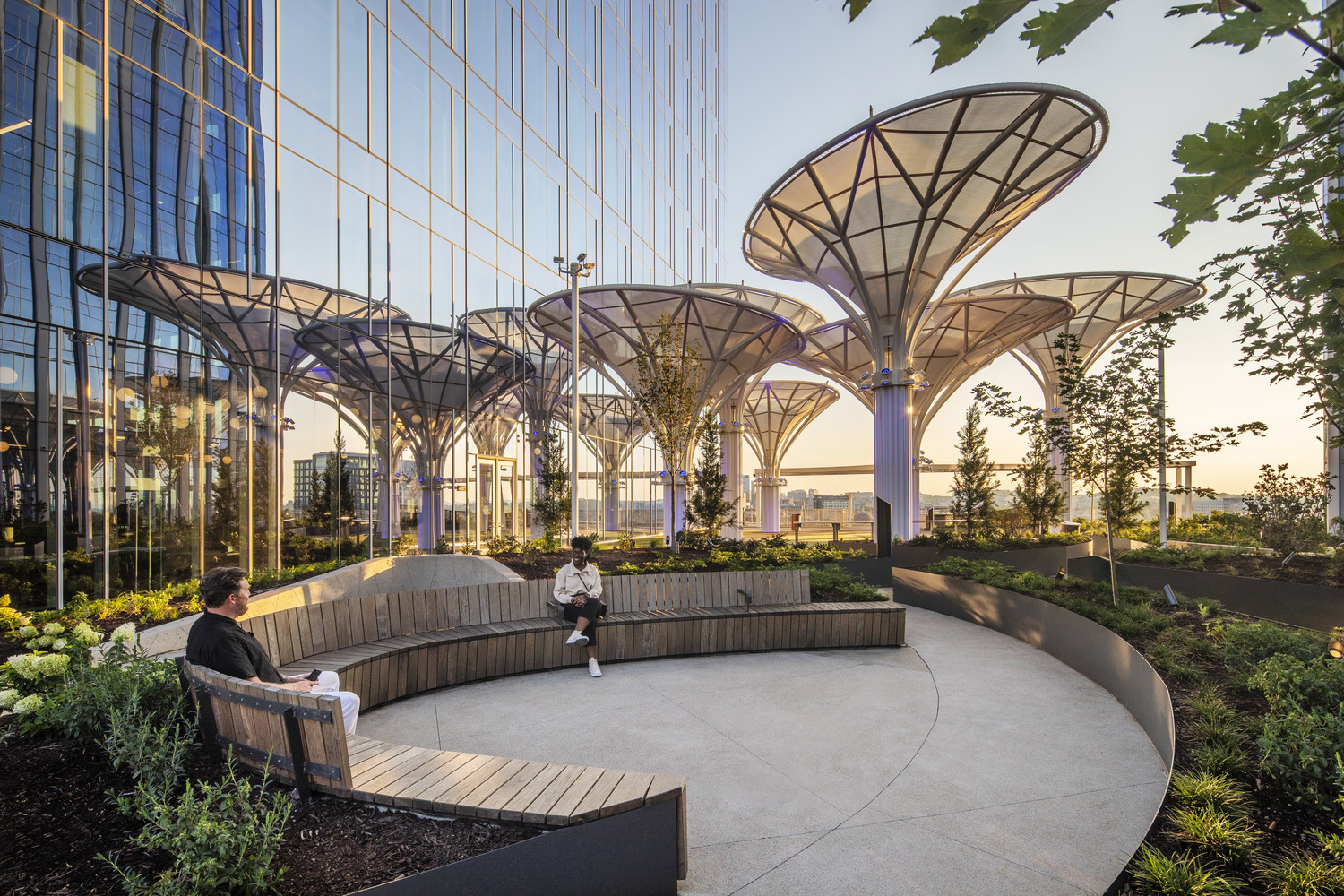
Our Environmental focus is rooted in working closely with our clients—advocating for responsible stewardship and helping them increase efficiency and reduce negative environmental impacts resulting from their operations. Our experience and passion uniquely position us to provide workable, sustainable, healthy and holistic solutions that address both current and future challenges. Across our firm, we also work to minimize waste and reduce our carbon footprint as we strive for a healthier, more sustainable and resilient future.
Goal 1: Develop, Capture and Report Design Metrics
Develop, capture and report metrics associated with our sustainability and resiliency design commitments to reduce— and ultimately eliminate—negative environmental impacts.
Our Commitments:
- AIA 2030 Commitment (Toward Net-Zero Operational Carbon)
- SE 2050 Commitment (Toward Net-Zero Embodied Carbon)
- AIA Materials Pledge (Toward Safer, More Sustainable and Equitable Materials)
Recent Accomplishments:
In 2025, we added a new commitment to Goal 1: The AIA Materials Pledge. Our practice has long incorporated material health into our design considerations, but the adoption of the this new, globally recognized program allows us to align our efforts with a clearly defined set of criteria. The AIA Materials Pledge provides a common platform to evaluate the impact of materials on Human Health, Social Health and Equity, Ecosystem Health, Climate Health, and a Circular Economy, and aligns with our prior efforts to collaborate with Mindful Materials in developing and promoting the Common Materials Framework, which underpins the program. In addition to signing on to the Pledge, our designers expedited the submission of our first projects for the 2025 reporting period.
For years, we have provided annual updates on our AIA 2030 and SE 2050 progress. Using the data harvesting system we developed and implemented internally, we were able to increase the total gross area of projects in design reported to AIA 2030 to more than 4.5 million square feet. In addition to our annual reporting for SE 2050, we continue to explore automations to allow our engineers and design teams to more rapidly understand the impact of design choices on embodied carbon and to explore alternative material solutions that can meaningfully move the needle.
The Resiliency Scorecard, a proprietary tool developed by Gresham Smith to aid design teams and owners in quickly evaluating resiliency risks and strategies for mitigation, was completed and is now in the process of being rolled out for firmwide use. As conditions continue to evolve resulting in potential impacts to our clients capacity to deliver their services and to the communities we practice in, we believe the Resiliency Scorecard will be a useful way to elevate awareness and ultimately push towards a more resilient future.
Goal 2: Develop, Capture and Report Business Metrics
Develop, capture and report metrics associated with our business operations to reduce—and ultimately eliminate—negative environmental impacts.
Our Commitments:
- Annual GHG Emissions Audit (Operational Carbon)
- Healthy + Sustainable Workplace Policy
Recent Accomplishments:
Though our greatest potential to amplify our Environmental impact will always be via our projects, we continue to prioritize carbon neutral business operations as in past years. We’ve carefully selected carbon credits that financially support nature preservation, the avoidance and destruction of industrial refrigerants, and long-term carbon removal technologies in the geographies where we work and live. We also continue to refine our data collection process to better understand where opportunities lie to reduce our operational carbon footprint.
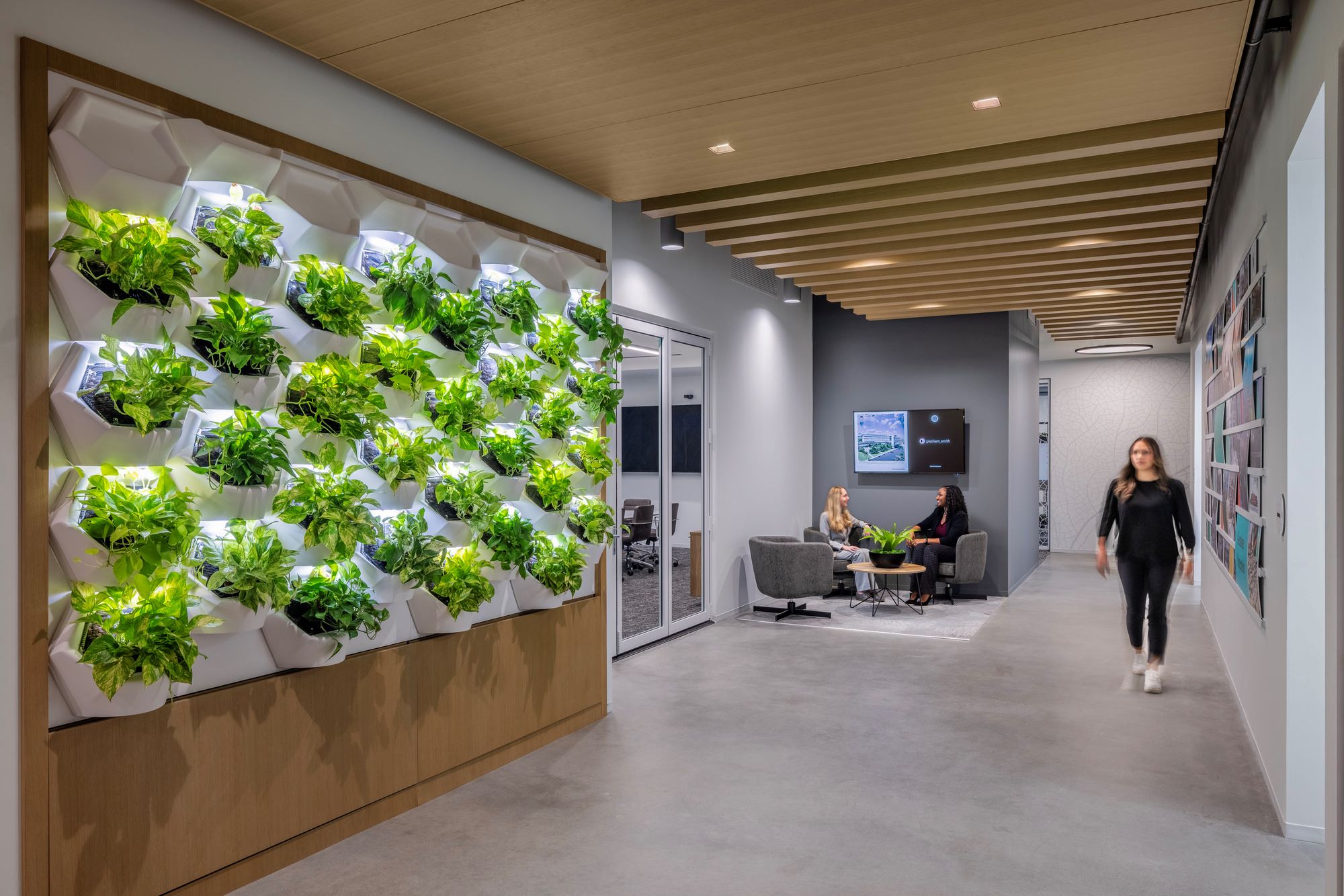
As we build out new office spaces, we are also focused on achieving environmental building certifications, such as Leadership in Energy and Environmental Design (LEED) and Fitwel designations, as appropriate. In 2025, new Gresham Smith office buildouts in Charlotte, Orlando and Tampa achieved environmental building certifications.
Learn About our Sustainability & Resiliency Services
We’re passionate about providing advisory, planning and design services that reduce the impact of the built environment and safeguard communities.
Social
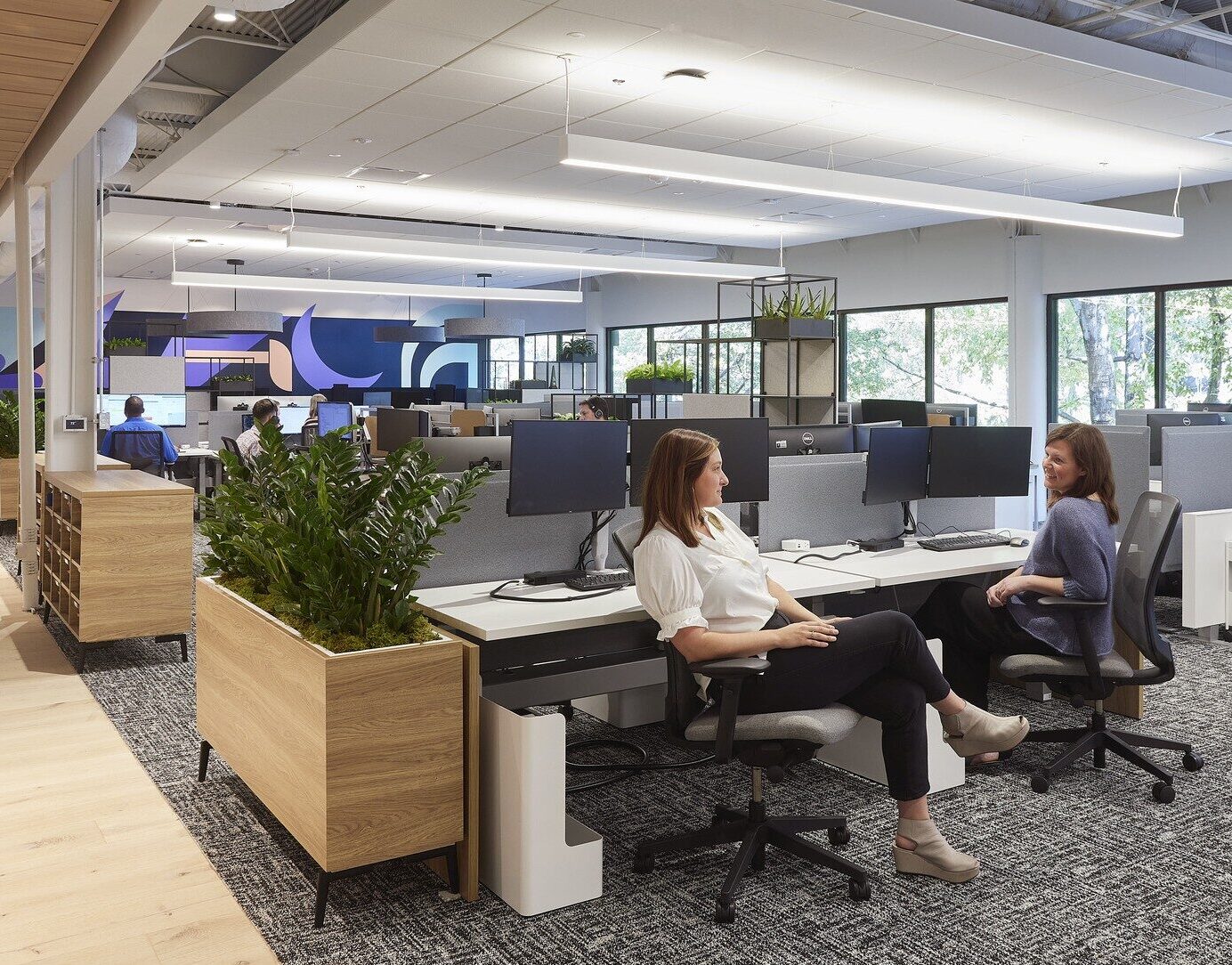
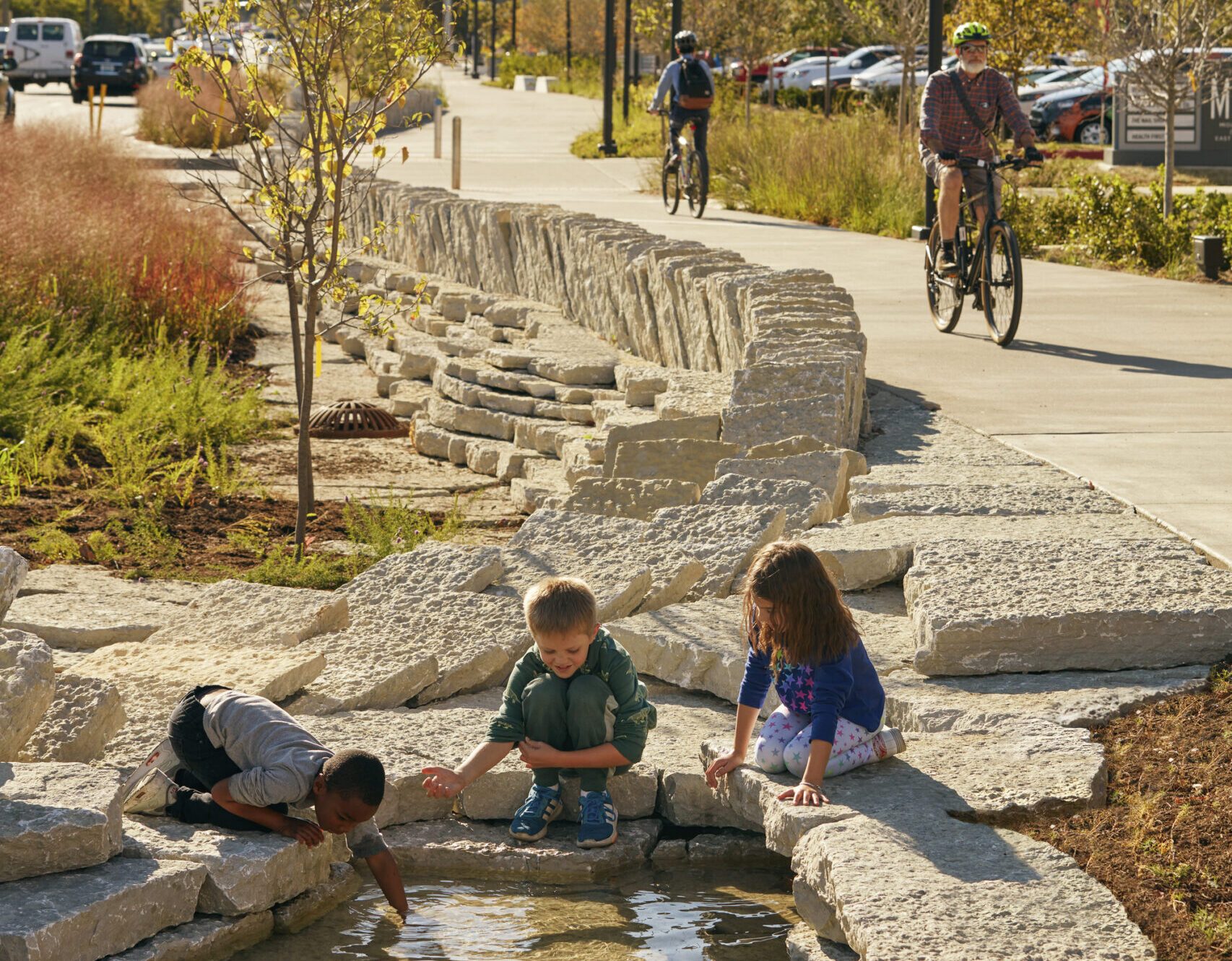
Our Social focus is driven by our company culture and engagement in activities that create healthy and thriving communities. Our company culture drives what we do, and our Core Values of Commitment, Integrity, Respect and Teamwork are foundational to our every interaction. Whether it’s working to ensure that each employee feels valued and included while having the opportunity for personal growth and professional development, or whether it’s giving back to the communities we serve, we believe that each of us has the opportunity—and the responsibility—to have a positive impact on the lives of those around us.
Goal 1: Cultivate Inclusive Culture
Cultivate a professional, inclusive culture where all employees feel that they belong, are valued and have equal opportunities to thrive, both personally and professionally.
Our Commitments:
- Perform compensation analysis for all employees and transparently communicate our compensation philosophy firmwide.
- Adopt best practices to provide all employees with the opportunity for professional growth and personal development through education and awareness, recruitment and workforce development.
- Ensure a safe and respectful workplace.
- Seek feedback through surveys and one-on-one interactions to consistently improve our firm’s culture and engagement.
Recent Accomplishments:
The results of our commitment to fostering a professional and inclusive culture have been clearly demonstrated through our employee engagement survey, which saw a 90% employee participation rate, and 89% of our employees reported as “fully engaged.” Our overall combined favorability score was 87%, and we saw continuing positive results in the areas of meaning, autonomy, growth, impact and community. Our work to foster a culture of belonging among employees has led to our being ranked in the top percentile of the ACEC Research Institute’s national “Diversity Roadmap Assessment Report.”
Goal 2: Support Employee Professional Growth and Personal Development
Commitment to supporting our employees’ professional growth and personal development through individualized career plans focused on their goals.
Our Commitments:
- Mentorship Program
- Build U Program
- Blueprint for Supervisory Excellence
- Internal and external learning and development, including licensure preparation and reimbursement, and access to CEUs
- Support and encouragement to participate in professional organizations
- Leadership Evolution and Advancement Project (LEAP)
- Formal succession planning
Recent Accomplishments:
Because we believe that education and continuous learning are fundamental to both personal development and professional growth, we make substantial investments to foster learning among employees at all stages of their careers. There were 15,000 training hours completed through our Build U Program in 2025. More than 10% of our employees are benefiting from initiatives such as our Leadership Evolution and Advancement Program and Supervisor Blueprint Program, which support our succession planning efforts. In addition, an average of 1,300 sessions are completed annually through our Flem Smith Mentorship Program, which provides a formalized approach for mentors and mentees to connect and create meaningful, one-on-one relationships.
Following feedback from our employees, we have restructured our tuition reimbursement and licensure preparation programs to more effectively support their professional development opportunities.
Goal 3: Commit Time and Resources to Community Engagement
Commit time and resources— from both the firm and individuals—to support community organizations that are having a positive impact on community well-being, health and wellness, and education/STEM-related causes.
Our Commitment:
- The Batey Gresham Philanthropic Program
- Tiered level of giving: firmwide, local and individual
- Volunteer matching hours
- Community Impact Award
Recent Accomplishments:
Community engagement aligns directly with our Core Purpose to “plan, design and consult to create healthy and thriving communities.” Through our Batey Gresham Philanthropic Program, we donate more than $1.25M annually to charitable and civic organizations, and have matched more than 1,200 employee volunteer hours. In addition, our annual Celebration event has a dedicated Community Impact Award to recognize individuals, teams and offices making a positive contribution to the world around us.
Governance
Our commitment to Governance as a privately-owned general partnership begins in our boardroom and with our Core Values, to ensure that we plan and execute the key elements of a strategic plan that is balanced and supports the long-term health and stability of our firm. Our robust operational and management systems are geared toward upholding high standards of integrity, accountability and operational excellence while also providing agility to adjust to new challenges and opportunities.
Goal 1: Govern Partnership with Clearly Defined Policies and Procedures
Govern our partnership with clearly defined policies and procedures built on a foundation of ethical principles, demonstrated commitment to transparent compliance, and a robust internal oversight structure.
Our Commitments:
- Core Values
- Oversight and accountability
- Annual Compliance training
Recent Accomplishments:
As part of our oversight framework, we’ve conducted audits related to internal controls, finances, cybersecurity and project quality control processes. Our employees completed multiple compliance training activities that were carefully selected to align our workforce and respond to the evolving landscape of various external risks, and we completed various policy and procedure updates, including Human Resources program enhancements, to benefit our employees and owners. As part of our efforts to provide transparency and clarity into the expectations we have for our employees, we developed a summary of key behaviors expected within each of our Core Values.
Goal 2: Maintain Smart, Sustainable, Strategic Business Model
Maintain a strategic focus on a smart, sustainable and resilient business model that is built around the firm’s long-term health and stability.
Our Commitments:
- Plan the work/work the plan
- Expanding our vision
- Valued and aligned services
Recent Accomplishments:
We’re pleased to report that in 2025 we exceeded our overall business plan net revenue and profit goals and continued to grow the firm in both revenue and people in a smart and sustainable manner. We also named a new Chief Digital Transformation Officer role to the C-Suite to provide executive level leadership for how we effectively respond to the rapid changes in technology in the overall A/E industry.
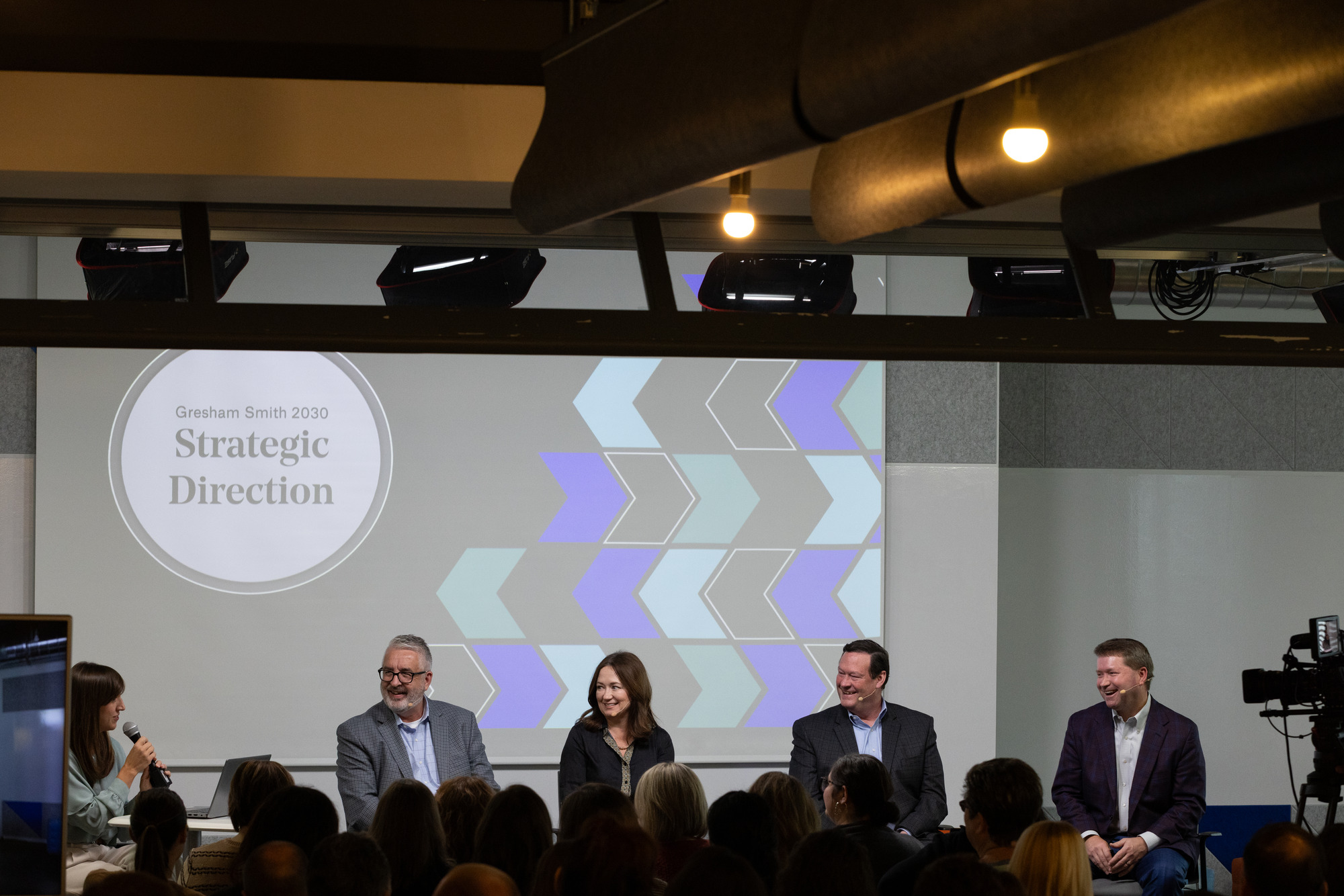
We also completed a year-long strategic planning effort during 2025 that resulted in a new 2030 Strategic Direction that clearly identifies our firmwide priorities and competitive advantages for the next five years. This firmwide 2030 Strategic Direction is in addition to 5-year strategic plans for each of our markets which were completed the prior year. Collectively, these 5-year strategic documents identify the vision and priorities that will guide the firm’s success over the next several years.
Goal 3: Proactively Manage Risk to Protect Stakeholders
Proactively manage our risk to protect our stakeholders.
Our Commitments:
- Enterprise risk management
- Project risk management
- Professional qualification
- Continuity
Recent Accomplishments:
We’ve continued to consistently apply risk management procedures to address potential project risks, along with our overall business risks. In addition, our board of director’s governance committee has evaluated and developed a new risk registry tool, which will be used to manage and document our advanced planning efforts for the most critical risk types that may impact the firm.
Beginning in January of 2026 we added “Chief Risk Officer” responsibilities to our Chief Financial Officer, which includes executive oversight of all enterprise risk management and risk registry items. We also created a new Director of Cybersecurity full time role to ensure a dedicated daily focus on protecting the firm from cybersecurity risks.