
Note: This article first ran in CoreNet Global the Source.
How to make long-term workplace decisions as headcount, work, and space needs become increasingly unpredictable.
The challenge for corporate real estate leaders is not to predict exactly how AI will reshape work. It is to make decisions today that remain valuable as those answers become clearer.
A few principles to integrate:
- Plan around the work, not just headcount. Five hundred employees in five years may not work the same way as 500 employees today.
- Do not ask one forecast to carry a ten-year decision. Test major workplace decisions against multiple possible futures.
- Match the permanence of the decision to the certainty of the assumption. The less certain the assumption, the easier it should be to change.
- Design around what the workplace needs to support. Focus on the activities that create the most value for the organization.
- Treat the workplace as a source of proof. Use what you learn from how people actually work to improve the next decision.
Workplace planning has always required some forecasting. For example, organizations estimate future headcount, establish attendance assumptions, determine utilization targets, and translate these into seats and square footage. The challenge is that the assumptions behind these decisions are now changing faster than real estate itself.
Technology has changed the way we work repeatedly over the past two decades. The pandemic challenged established expectations about where work should happen. Hybrid work and return-to-office mandates forced organizations to reconsider attendance, utilization, and the office’s role, often multiple times. Today, AI presents the next uncertainty.
Like those earlier shifts, AI’s influence goes beyond workplace technology and could alter team sizes, create new roles, change the nature of work, and shift the skills companies prioritize. Each change can affect workplace requirements and real estate decisions.
KPMG’s 2026 U.S. CEO Outlook Pulse Survey shows just how varied the expectations are. 55% of U.S. CEOs expect AI to increase hiring, while 36% expect no net workforce change. More telling for workplace planning, 67% have a preliminary view of how AI may affect roles but have not yet redefined those roles or career paths.
However, companies cannot wait for every question to be answered. Leases must still be negotiated, capital allocated, and workplaces planned. The goal is not flawless prediction but making decisions that remain valuable even as the assumptions behind them change.
Headcount Is No Longer Enough
It’s easy to assume that AI-driven automation will reduce the number of employees and office space requirements. While this may occur in some organizations, the relationship between AI and workforce requirements is much more complex.
The assumption that greater AI adoption will automatically mean fewer employees is questioned in PwC’s 2026 Global AI Jobs Barometer. Its analysis of more than one billion job postings in almost every field found that companies achieving the strongest productivity gains from AI are also seeing stronger headcount growth. At the same time, skills are changing more than twice as quickly in the jobs most exposed to AI.
For workplace planning, this is significant: AI may change the nature of work as much as the number of employees.
Some jobs may contract while others expand. New capabilities may emerge. Employees may spend less time on routine tasks and more on judgment, problem-solving, client advising, learning, mentoring, or decision-making. An organization with 500 employees in 5 years may not work in the same way as 500 employees today.
For that reason, headcount remains important, but it should not solely define the workplace. Effective planning starts by asking different questions: Which activities actually require people to be together? Which roles or behaviors are likely to change? What should the workplace make easier, faster, or better?
The answer is to translate those activities into workplace requirements before translating headcount into square footage. Understanding the work first creates a stronger basis for decisions about space types, ratios, adjacencies, infrastructure, and ultimately how much space is needed.
Plan for Multiple Futures, Not One Forecast
Understanding today’s work provides a foundation. Planning for how it might change requires a broader view. That’s why forecasting continues to be essential in corporate real estate planning, but a single projection is too narrow a basis for a long-term commitment. Scenario planning tests whether decisions can hold up under different conditions.
For example, a contraction scenario might test what happens if the headcount falls by 20%. Can teams consolidate without leaving large portions of the workplace visibly underused? Can the organization reduce its occupied footprint without major intervention?
By comparison, a stable-headcount scenario explores what happens if headcount remains stable but the nature of work changes significantly. A workplace designed for individual production today may require a different mix of focused work, collaboration, mentoring, learning, and client interaction in the future.
A growth scenario should also be considered. If AI increases productivity, enables new services, or creates business opportunities, can teams expand without needing another lease or major renovation?
Across these scenarios, the goal is not to design a perfect workplace for every possible future, but to identify decisions that would remain useful across multiple scenarios. Instead of focusing only on opening day, ask whether these choices will still serve the organization in three to five years.
Make Permanent Decisions More Deliberately
Testing those futures also helps clarify which decisions should be permanent and which should remain open to change.
With over two decades of workplace design experience, I’ve seen how quickly even well-developed assumptions can change. Teams expand and contract, acquisitions reshape organizations, and leadership changes redirect priorities. The greater risk isn’t that assumptions will change, since that is inevitable. The real risk is making those assumptions costly to change.
Some workplace decisions require permanence. Lease commitments, major infrastructure, mechanical and electrical systems, circulation, and core architectural elements should be planned for the long term. Other elements, such as team locations, workstation counts, furniture layouts, and many enclosed rooms, should remain flexible to support organizational change. The rule is simple: The less certain the assumption, the easier it should be to change.
This is where optionality becomes valuable. While flexibility is a common response to change, optionality is more specific: it is the ability to make different decisions later without undoing significant investments made today.
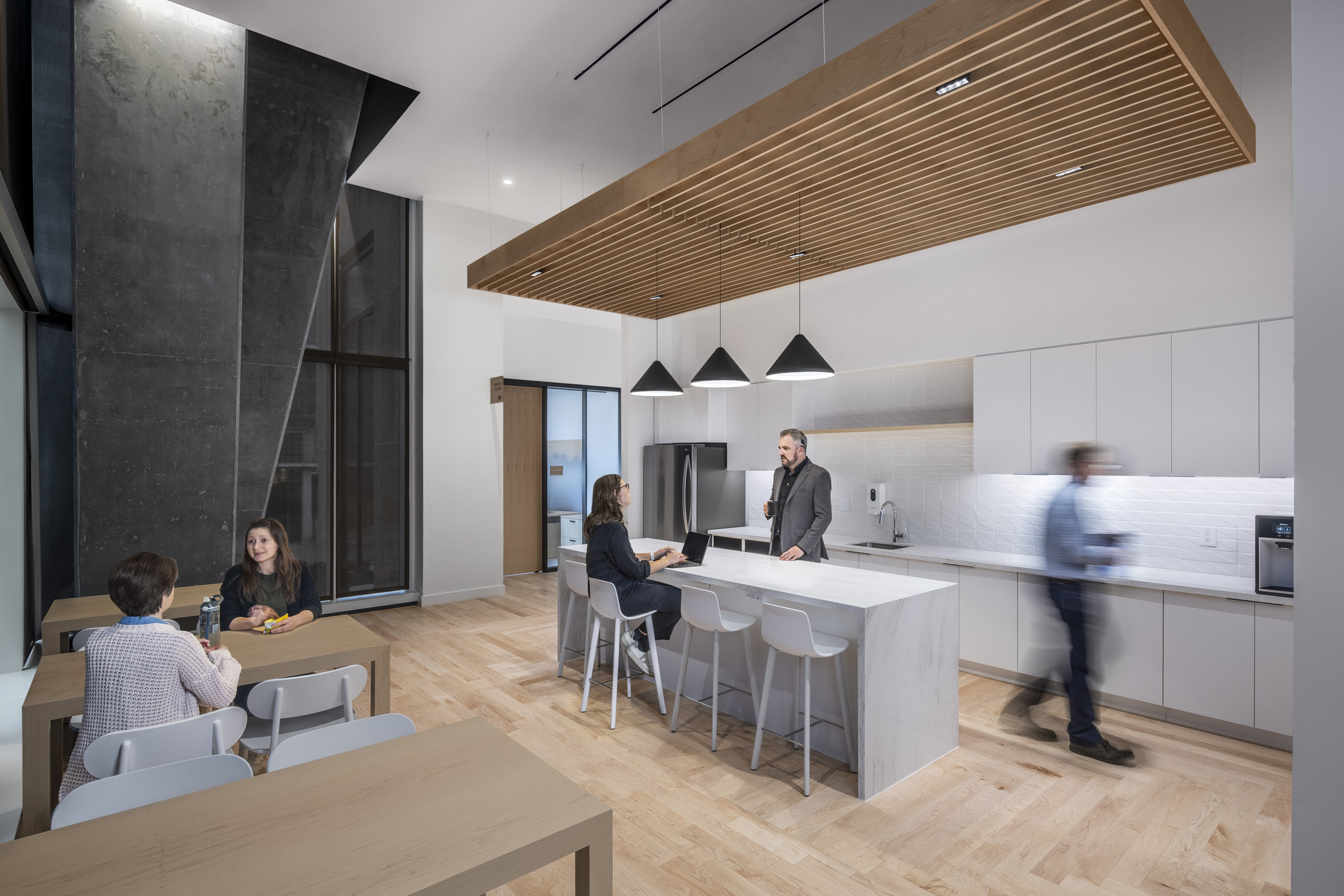
For example, a well-designed room with appropriate infrastructure can serve as a project room now, a training space later, and client space in the future. A repeatable planning module allows teams to expand or contract without major renovations. Furniture can accommodate changes that might otherwise require construction.
The goal is not to make everything movable. It is to determine deliberately what deserves permanence and what does not.
Rethink What the Workplace Needs to Do
With that framework in place, the question becomes where changing work will create new demands on space.
AI is already influencing real estate decisions. CBRE’s 2026 Americas Office Occupier Sentiment Survey found that more than half of organizations are already seeing AI affect space planning or expect it to do so within the next two years.
Notably, organizations are responding differently. Half expect greater demand for multipurpose reconfigurable space, while 30% anticipate more specialized environments, like innovation and training spaces. Meanwhile, 37% expect AI to reduce headcount and total space.
These expectations can coexist: an organization may need less space overall while requiring more of certain types of space. The planning challenge is to understand which activities will drive that demand.
In practice, those demands will vary by organization. For a professional services firm, the workplace may place greater emphasis on mentoring, focused work, team problem-solving, and client interaction. Tech companies may need more settings where multidisciplinary teams can collaborate for sustained periods. Another organization may find that AI makes certain individual tasks faster while increasing the importance of learning, decision-making, and expertise-sharing.
This does not mean simply replacing individual workstations with collaboration rooms, as that would substitute one untested assumption for another. There is no one-size-fits-all solution for the AI workplace. The work itself should determine how the workplace is designed.
Measure the Impact for the Next Decision
To know whether those design decisions are working, organizations need to keep learning after occupancy. The workplace should serve as a living lab, not just a finished product that remains static until the next lease event.
Our insight into AI’s impact will improve over time. Organizations will learn which technologies drive productivity, which roles evolve, where new skills are needed, and which human interactions become more important.
Even so, a significant gap remains between recognizing change and being prepared for it. Deloitte’s 2026 Global Human Capital Trends found that 85% of leaders consider adaptability critical, yet only 6% report real progress in designing how people and AI will work together.
This makes post-occupancy learning increasingly important. Which environments are consistently used? Where does demand exceed supply? Which spaces are underused? What activities bring employees together? How are teams and work patterns evolving? Which planning assumptions are holding up, and which need to change?
Utilization and attendance are useful metrics, but they provide only part of the picture. A comprehensive workplace strategy should also assess how well the space supports the activities it was designed to facilitate.
With that evidence, the objective is not constant redesign, but making smaller, educated adjustments as evidence emerges. An adaptable workplace enables organizations to learn before committing additional capital.
Design for Adaptation
Taken together, these steps provide a way to act without waiting for certainty. AI will bring new ways of working and new needs for the workforce. But uncertainty about exactly what comes next should not become a reason to postpone workplace decisions. Waiting can mean continuing to invest in a space based on assumptions that are already outdated.
Test major investments against multiple possible futures. Plan around the work, not just headcount. Make permanent decisions deliberately. Preserve options where change is likely. Measure workplace performance and use what you learn to guide the next investment.
Organizations do not need to predict exactly how AI will reshape work before improving the workplace they have today. A workplace that better supports the organization now and can evolve as the organization changes is a stronger investment than maintaining an outdated environment while waiting for certainty.
The most successful workplace will not be the one that perfectly predicts the future. It will be the one that keeps performing as the organization evolves.
AI is today’s uncertainty. But it will not be the last. The strongest workplace strategies allow organizations to make better decisions now without limiting what they can do next.
Laurel Harrison, NCIDQ, IIDA, LEED AP is a Project Executive and workplace design leader with more than 20 years of experience shaping corporate and professional services environments. She currently serves as President of the CoreNet Global Tennessee Chapter. Her work focuses on helping organizations translate changes in business, workforce, and ways of working into informed real estate and design decisions.