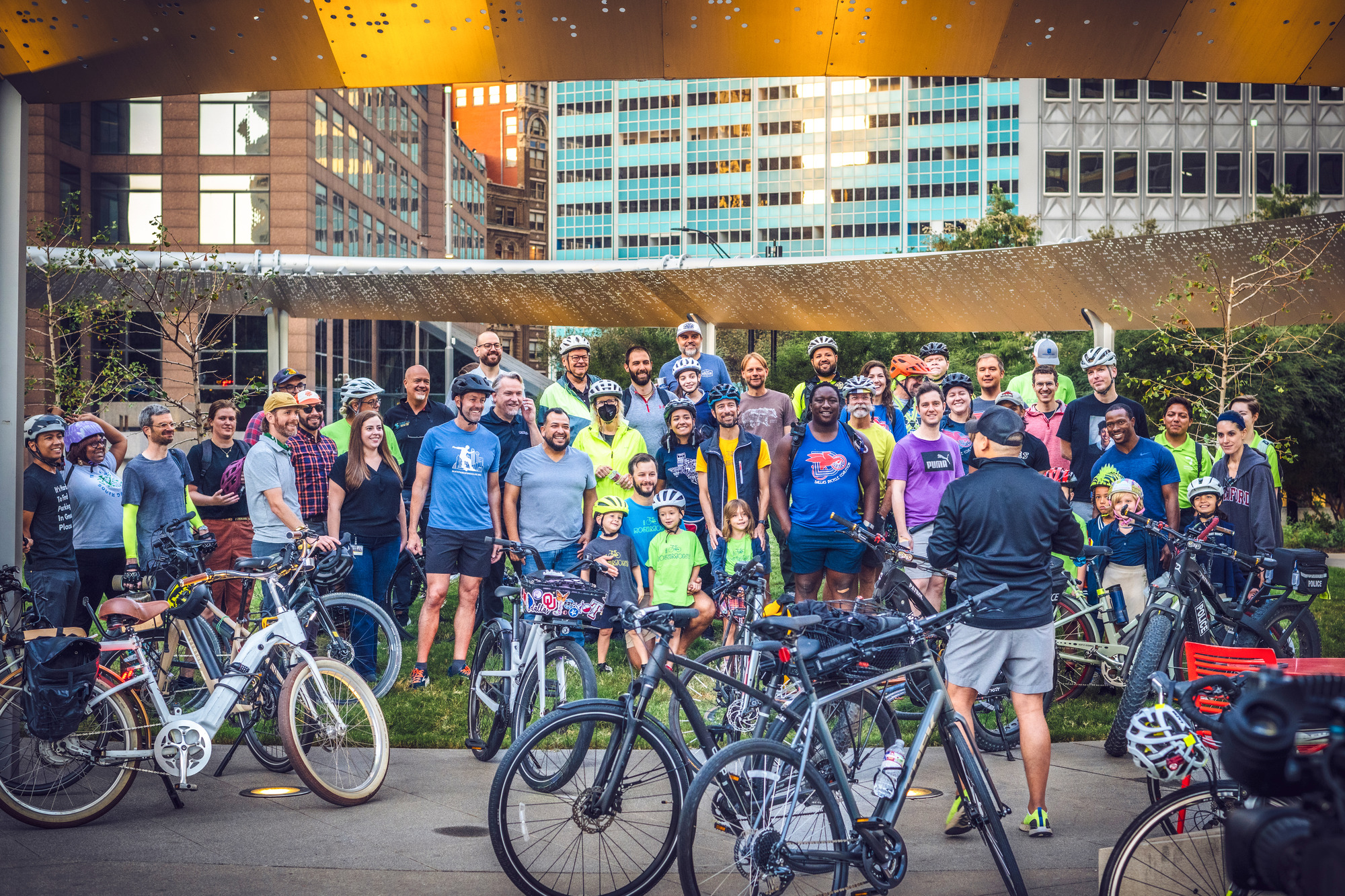
A Citywide Bicycle Network
The Dallas Bike Plan proposes 543.1 additional miles of bicycle infrastructure, creating a cohesive 759.5-mile citywide network. The recommended network includes four primary facility types:
- Neighborhood bikeways
- Visually separated bike lanes
- Physically separated bike lanes
- Trails and shared-use paths
Together, these facilities are designed to close critical network gaps, improve access to destinations and provide safe, comfortable routes throughout the city. The plan also supports last-mile connections near transit stations and DART corridors while linking Dallas to regional trail systems, including the Trinity River Corridor and NCTCOG’s Veloweb network.
Shaped by the Dallas Community
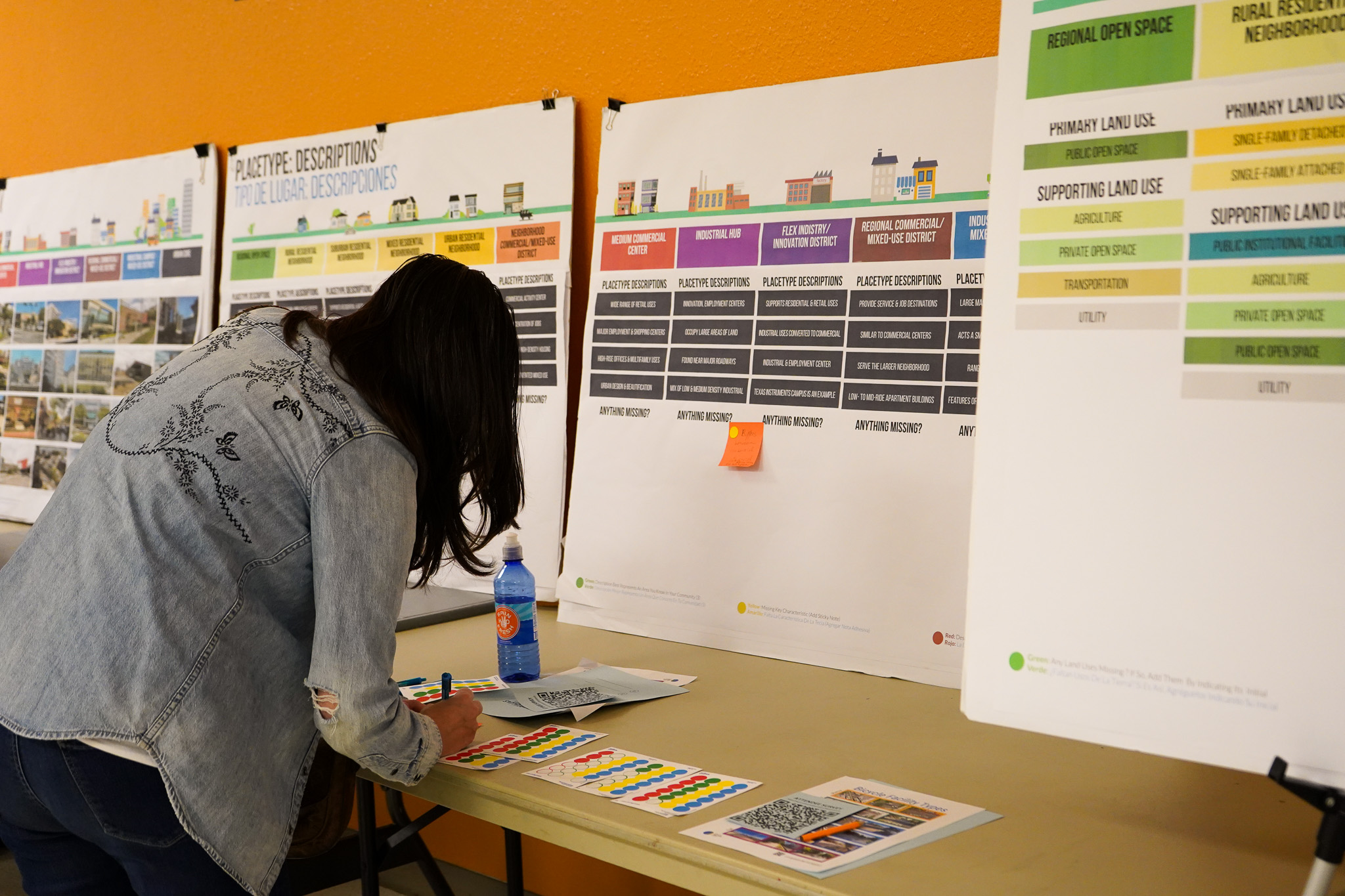
Community collaboration was central to developing the Dallas Bike Plan. Over five phases of engagement from 2022 through 2025, more than 3,000 residents participated through surveys, workshops and online sessions. Many more people engaged with the plan through project webpages and digital outreach.
Residents helped shape the plan’s vision, identify priorities and explore the opportunities and trade-offs involved in designing streets and allocating funding. Innovative tools, including an interactive text line, Social Pinpoint online mapping and a gamification-based prioritization activities, helped make participation accessible, engaging and meaningful. Together, these tools generated valuable community insight and helped inform project prioritization.
A Blueprint for a Healthier Dallas
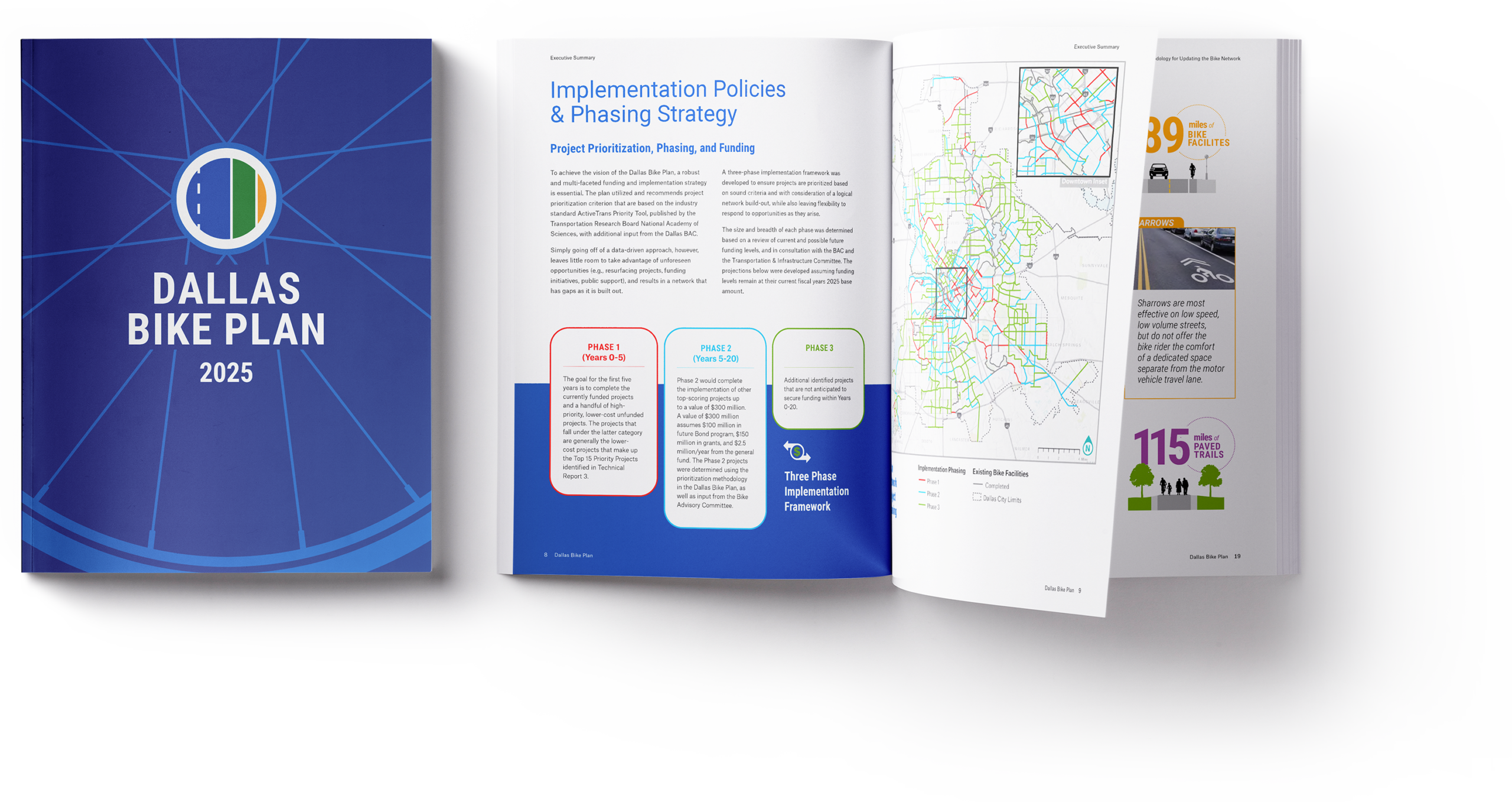
The Dallas Bike Plan uses data-driven prioritization to evaluate projects based on safety, demand, connectivity, cost and public support. Its performance framework establishes measurable targets for safety improvements, education, implementation progress and increased bicycle use.
When implemented, the plan will give residents more affordable and flexible transportation options while supporting healthier lifestyles, cleaner air and reduced dependence on single-occupancy vehicles. By improving access to destinations and prioritizing historically underserved neighborhoods, the Dallas Bike Plan will strengthen the city’s public realm and quality of life—creating a safer, more vibrant and connected Dallas.