Designing for Scale, Reliability and the Future
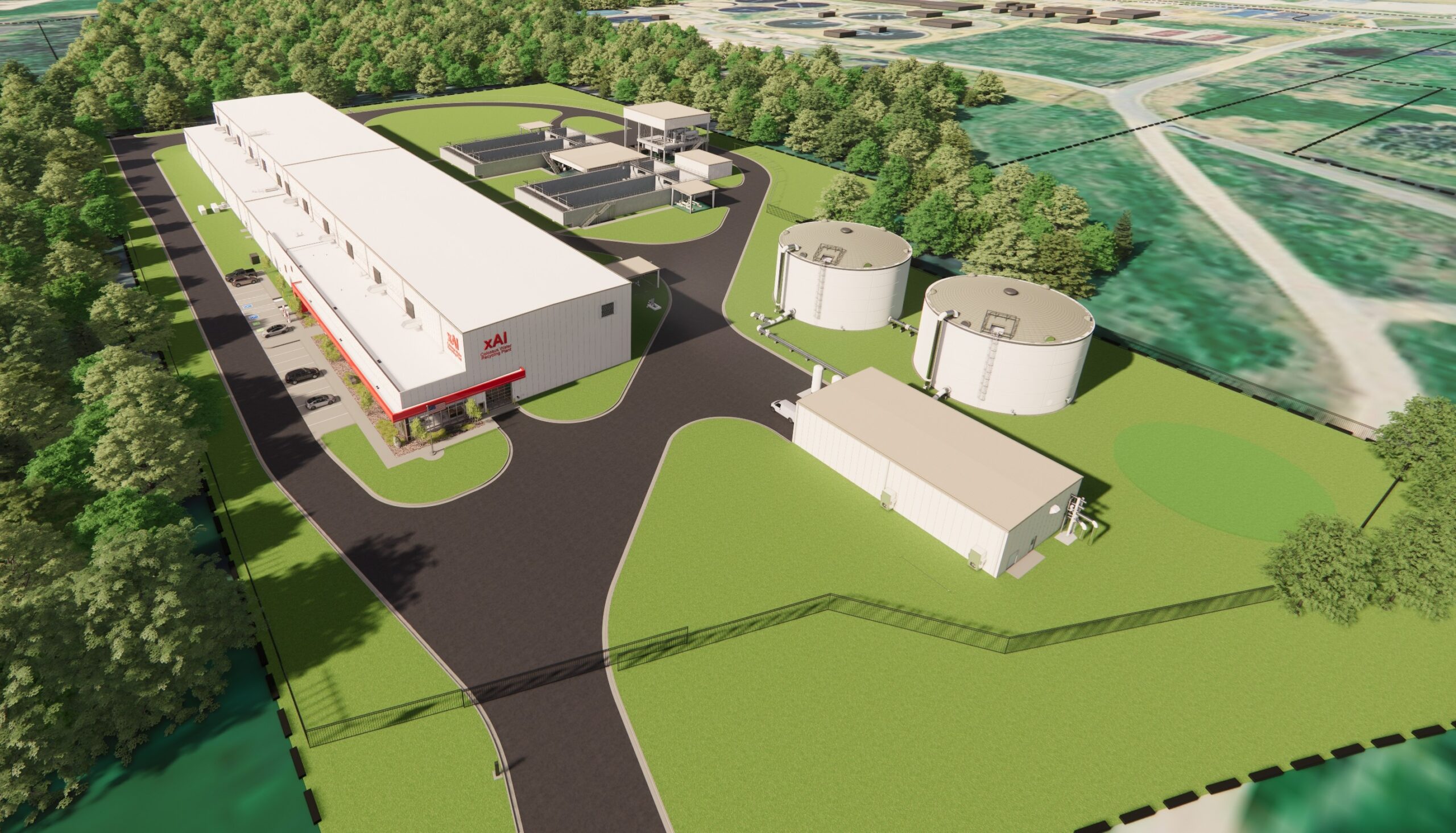
Gresham Smith designed and permitted the Colossus Water Recycling Plant under Tennessee’s new reuse standards and to meet the cooling water requirements of local industry partners. Once operational, it will be the world’s largest ceramic membrane bioreactor (MBR) and Tennessee’s first facility dedicated to centralized reuse water production—delivering up to 13 million gallons per day of high-quality water to xAI’s Colossus Supercomputer campus and TVA’s Allen Combined Cycle Plant.
By repurposing treated wastewater for cooling, the facility dramatically reduces the need for potable water and preserves approximately 5 billion gallons annually from the Memphis Sand Aquifer. Most of the reused water will be evaporated through cooling processes, and the remainder will return to the T.E. Maxson WWTF facility resulting in a reduction in pollutant load discharged to the Mississippi River.
Overcoming Design Challenges Through Collaboration
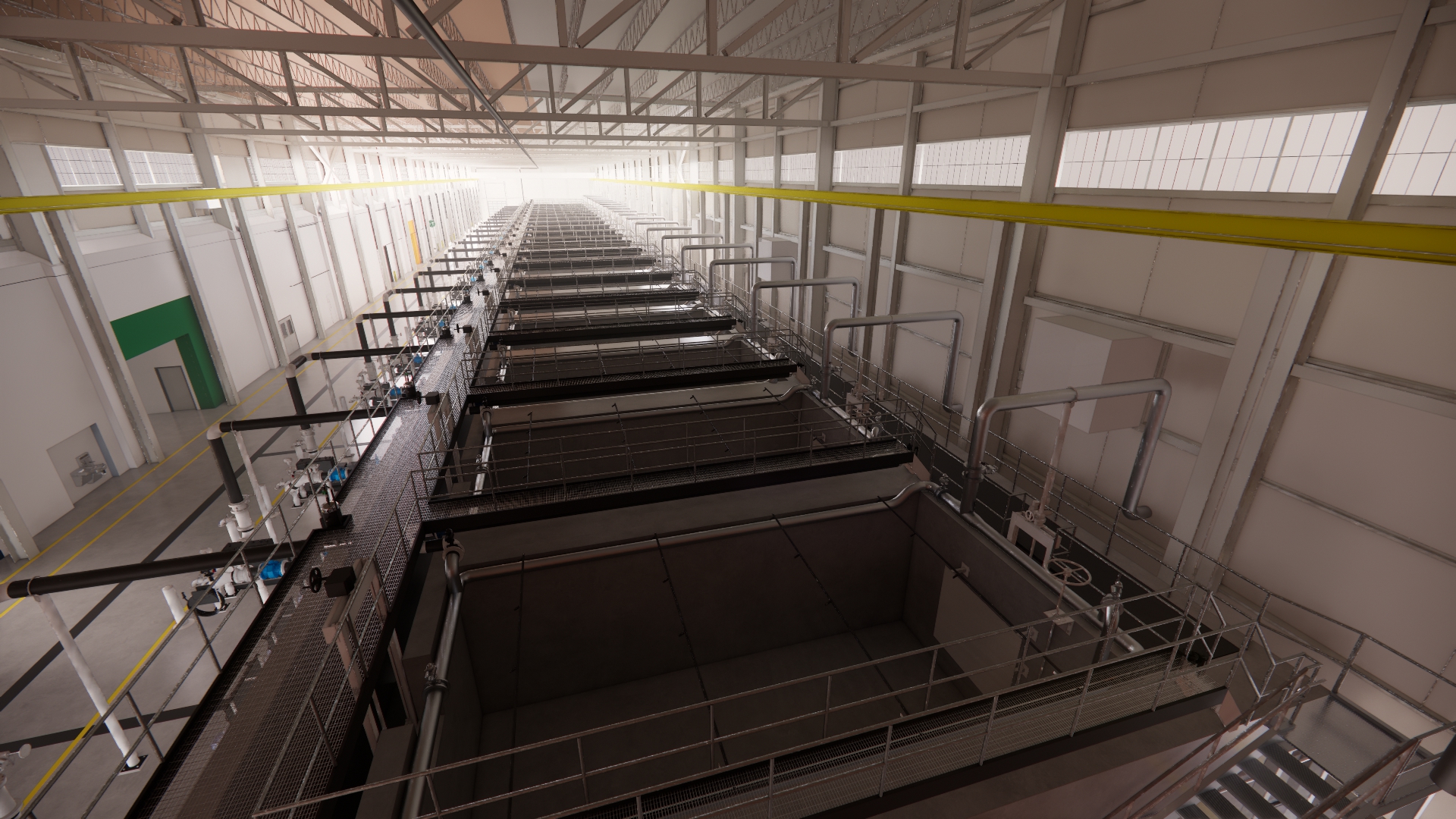
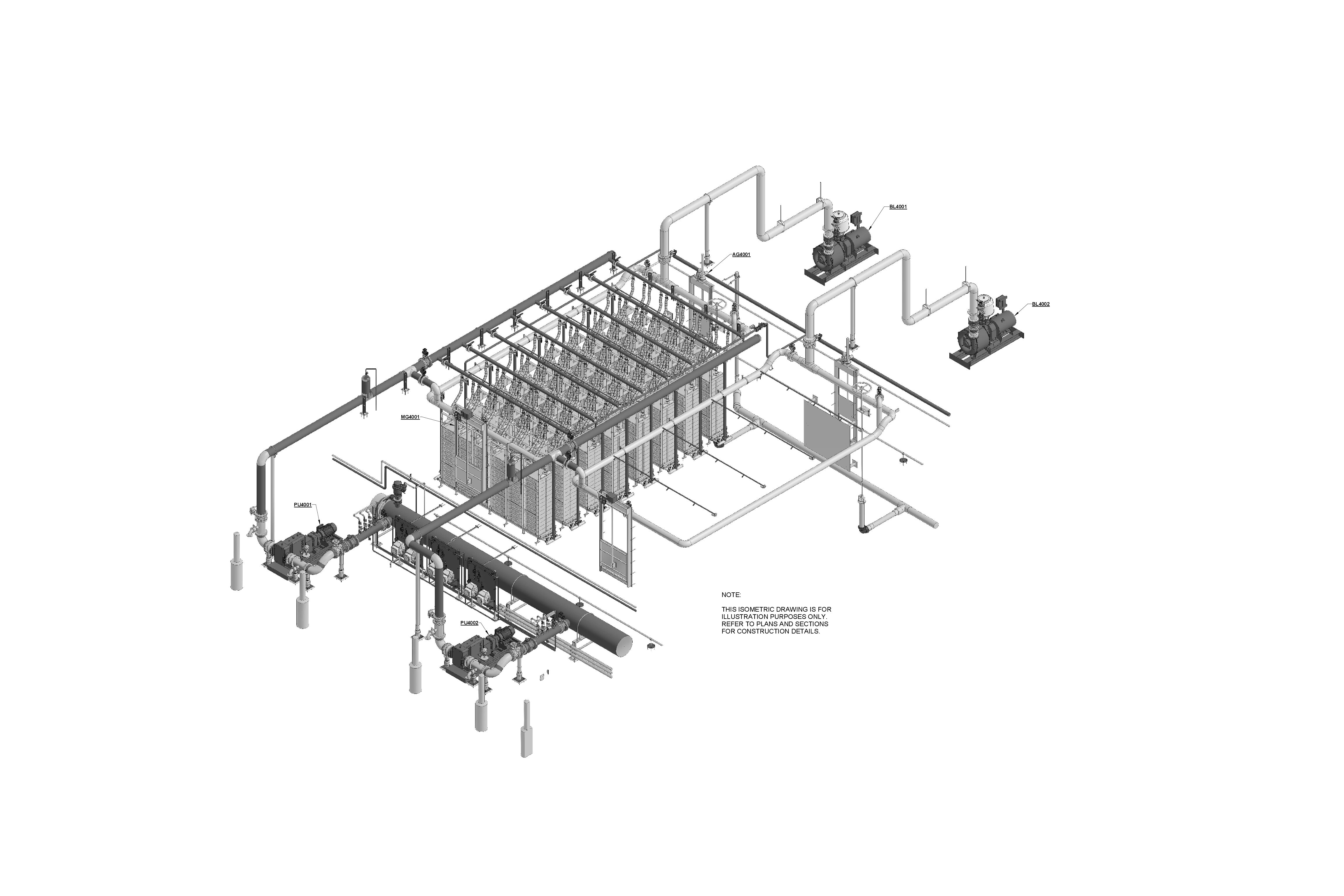
Building a facility of this magnitude required more than engineering expertise; it demanded new ways of thinking. The sheer number of treatment modules and tanks meant that every decision had to balance performance, operability, and long‑term maintenance.
Gresham Smith worked hand‑in‑hand with xAI and the membrane manufacturer to develop a custom configuration that simplifies access, streamlines cleaning, and allows each tank to operate independently. This design ensures the plant can run continuously, reliably, and efficiently, which is a necessity for supporting high‑demand cooling operations tied to mission‑critical computing.
A Regional Partnership with a Lasting Impact
As only the third wastewater treatment plant with a secondary treatment system on the island of Guam, this project sets the standard for overcoming climate and site constraints and adhering to stringent design requirements set by the U.S. government to deliver an operationally efficient design solution that benefits residents of Guam. The upgraded treatment processes, particularly the biological secondary treatment and UV disinfection system, will improve the quality of the effluent discharged to the Philippine Sea, reducing the impacts to coral reefs and protecting the natural resources vital to Guam’s economy.
A Model for What’s Possible
When complete, the Colossus Water Recycling Plant will stand as the world’s largest and most operator‑friendly ceramic membrane bioreactor and a national example of how strategic infrastructure design can support technological innovation without sacrificing environmental stewardship.
By transforming wastewater into a reliable cooling resource, Gresham Smith and xAI helped the City of Memphis chart a path that protects its aquifer, supports its growing tech sector, and sets a new standard for sustainable data‑center development.