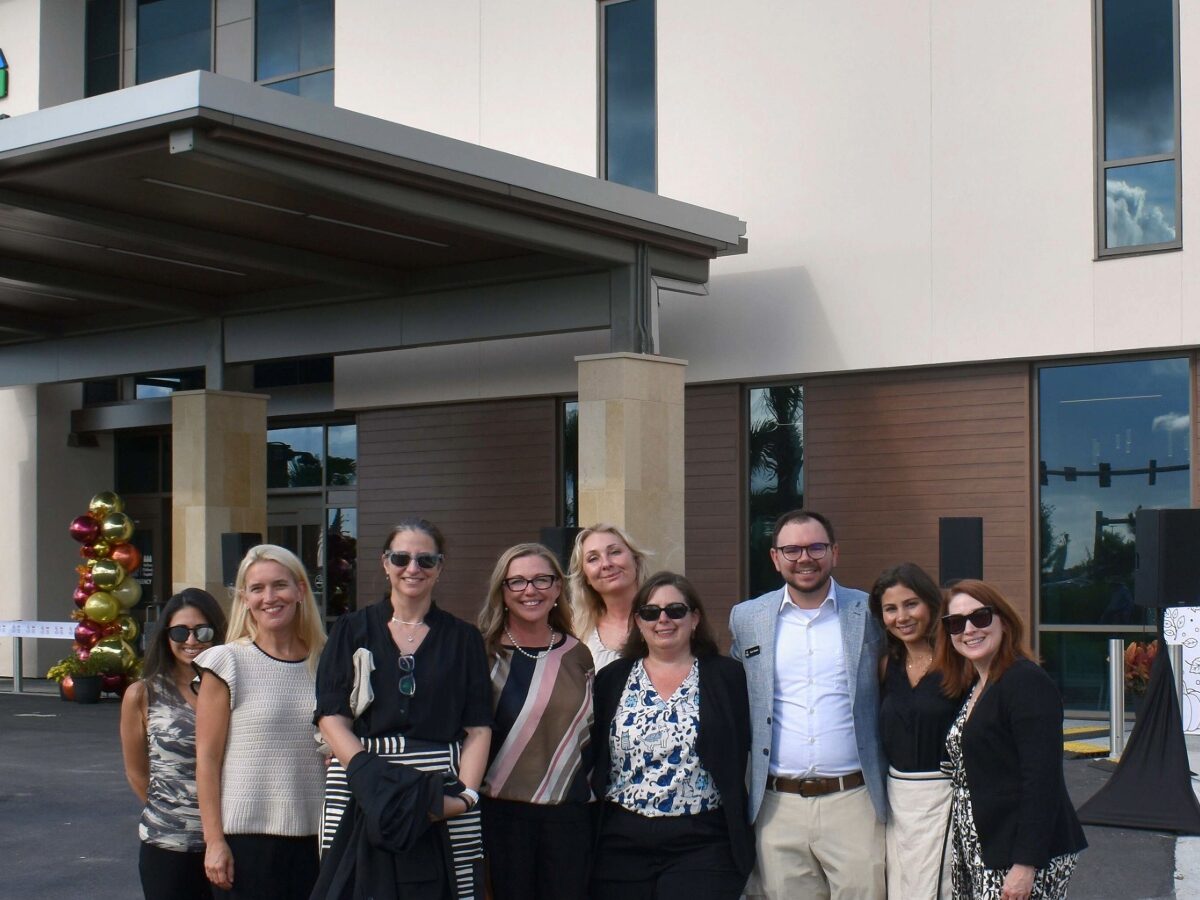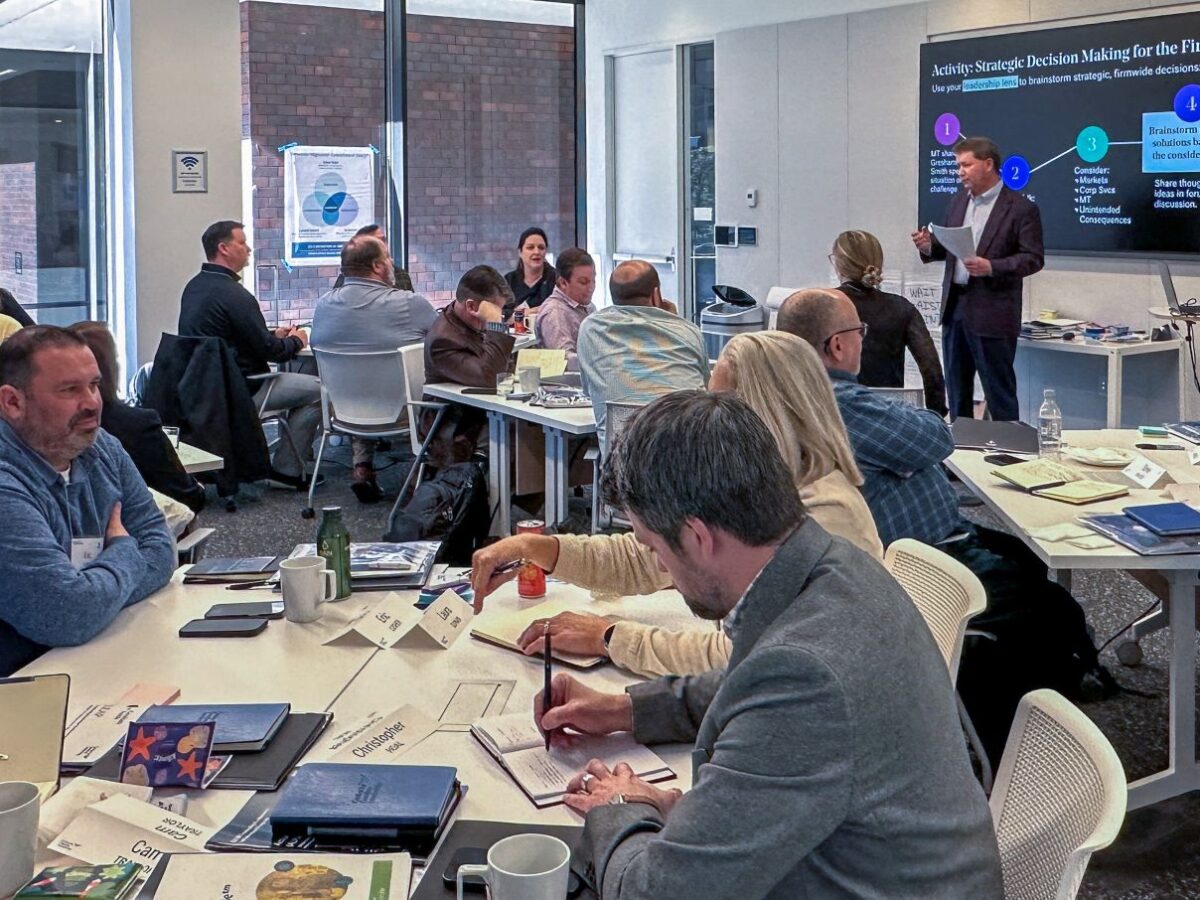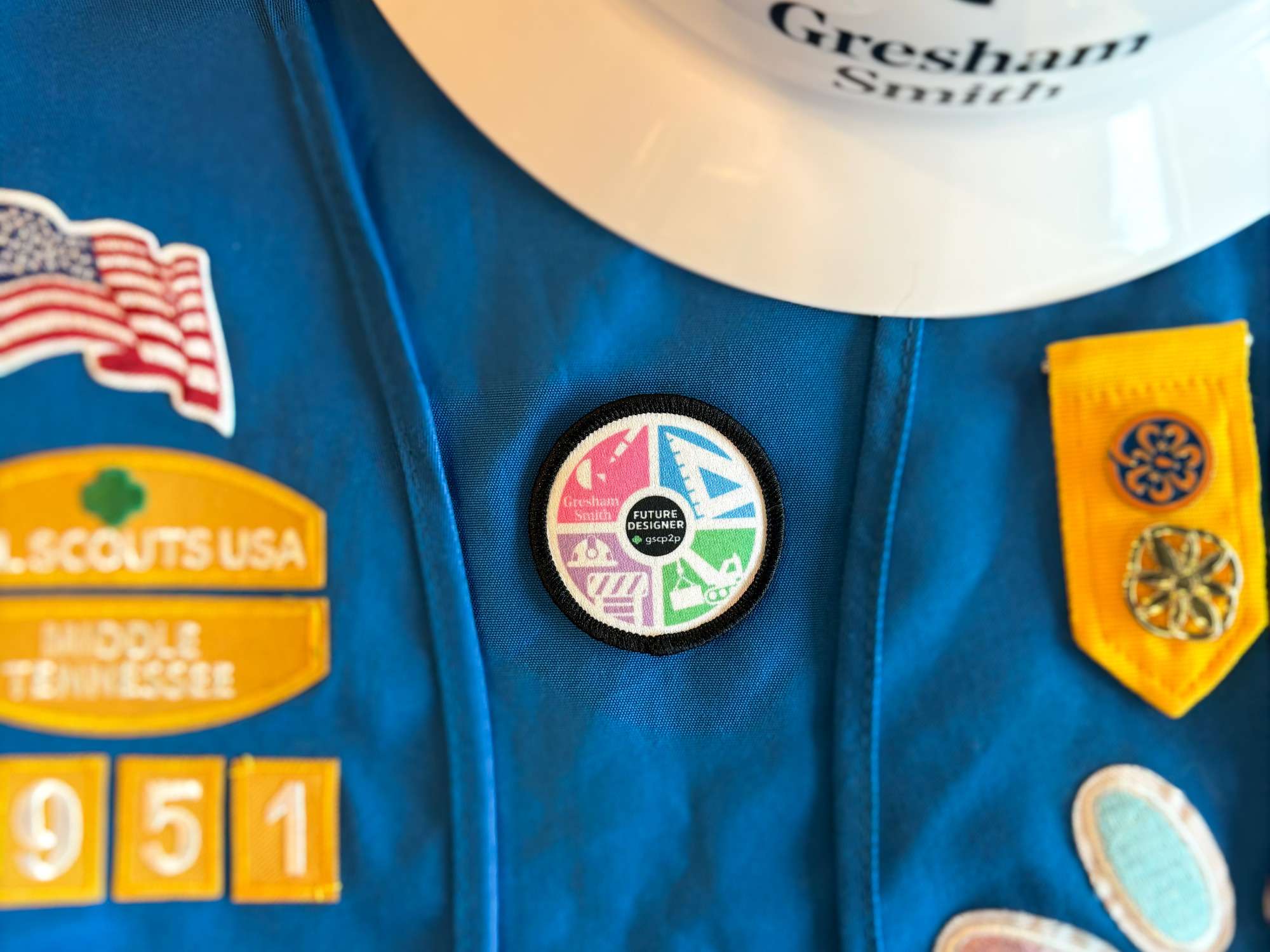
What if a single patch could spark a lifelong interest in shaping the world around us? That question was posed by the Gresham Smith Women’s Employee Resource Network (ERN), where a group of members, all former scouts, saw an opportunity to inspire the next generation. That spark set Interior Designer Sarah Boyne, NCIDQ; Architecture Studio Leader Zoe Fisher, AIA; Marketing Coordinator Shelby Harring; Senior Vice President of Aviation Jessica Smith, NCIDQ; and Senior Architect Matthew Wilson, AIA, LEED AP on a two‑year journey that ultimately led to the Girl Scouts’ new Future Designer patch.
As part of the ERN’s mission to support women and expand pathways into the AEC industry, the team began reviewing the Girl Scouts’ existing STEM offerings. They quickly noticed a gap. While badges covered coding, robotics and math, none introduced girls to the professions that shape the built environment.
“We identified the absence of an AEC design component,” Wilson says. “That gap inspired us to create a program that brings architecture, engineering and design into the Girl Scout experience.”
The Future Designer Patch Program officially launched in 2025 through the Girl Scouts Carolinas Peaks to Piedmont council, where it was selected as the November Patch of the Month.
Building the Blueprint
What began as an ERN‑driven idea grew into a cross‑disciplinary effort. Over two years, Wilson, Harring, Fisher, Boyne and Smith developed a curriculum that highlights how creativity and problem‑solving drive architecture and engineering. Working with Girl Scout leaders Kaydee Tiemann and Emily Satterfield, the team refined the program through reviews, pilot testing and field feedback.
“Every activity was designed to show how creativity and problem‑solving come together in our field,” Smith says. “We wanted scouts to see the built environment as something they can influence.”
Field testing over the summer helped fine-tune the activities, ensuring they were educational and approachable across all age groups. With positive feedback from scouts, troop leaders and the GSCP2P management team, the program took its final steps toward launch.
The Patch Comes to Life
At the heart of Future Designer is a collection of hands-on, imaginative activities that bring the design world into focus. Younger scouts can sketch floor plans of their dream homes, reimagine their classrooms for better flow, or build a collage of their ideal park. Older scouts can explore topics such as architectural styles, engineering structures or even develop a mock branding package for their own “design firm.”
For scouts with a curiosity about how things work, activities explore the mechanics behind bridges, light switches and water systems, connecting design ideas to real-world applications. The curriculum also encourages career exploration, asking scouts to research women designers, interview local professionals or tour design studios and construction sites.
The patch itself, designed by Harring, went through several iterations before final approval by Girl Scout leadership. The final design captures both the spirit of partnership and the creative energy behind the program—a visual symbol that girls can proudly wear once they’ve completed their activities.
“This patch is more than a design, it’s a symbol of connection,” notes Harring. “It represents every hand, conversation and idea that brought Future Designer to life.”
A First of Its Kind
The Future Designer patch is believed to be the first patch of its kind within the Girl Scouts organization, connecting scouts to the architecture, design, engineering and construction industries with this milestone achievement that’s both exciting and deeply meaningful for the team that envisioned it.
“It’s amazing to think about the scouts who’ll earn this patch,” says Fisher. “They’ll walk away with a better sense of what’s possible, that they can be designers, engineers, planners or maybe even future clients.”
While the initial rollout is focused within the Carolinas, the ERN team hopes the interest and success of the pilot will continue to grow. “Our goal was to plant a seed,” adds Boyne. “If this experience helps even one scout see design in a new light, it’s worth it.”
From early brainstorming sessions to the program’s official launch, the Future Designer patch shows what can happen when creativity, mentorship and persistence come together—and how the next generation of designers just might begin with a single patch.