🩺 Reimagining Urban Healthcare: Tennessee Oncology’s Elliston Place Plaza
Transforming Urban Cancer Care in the Heart of Nashville
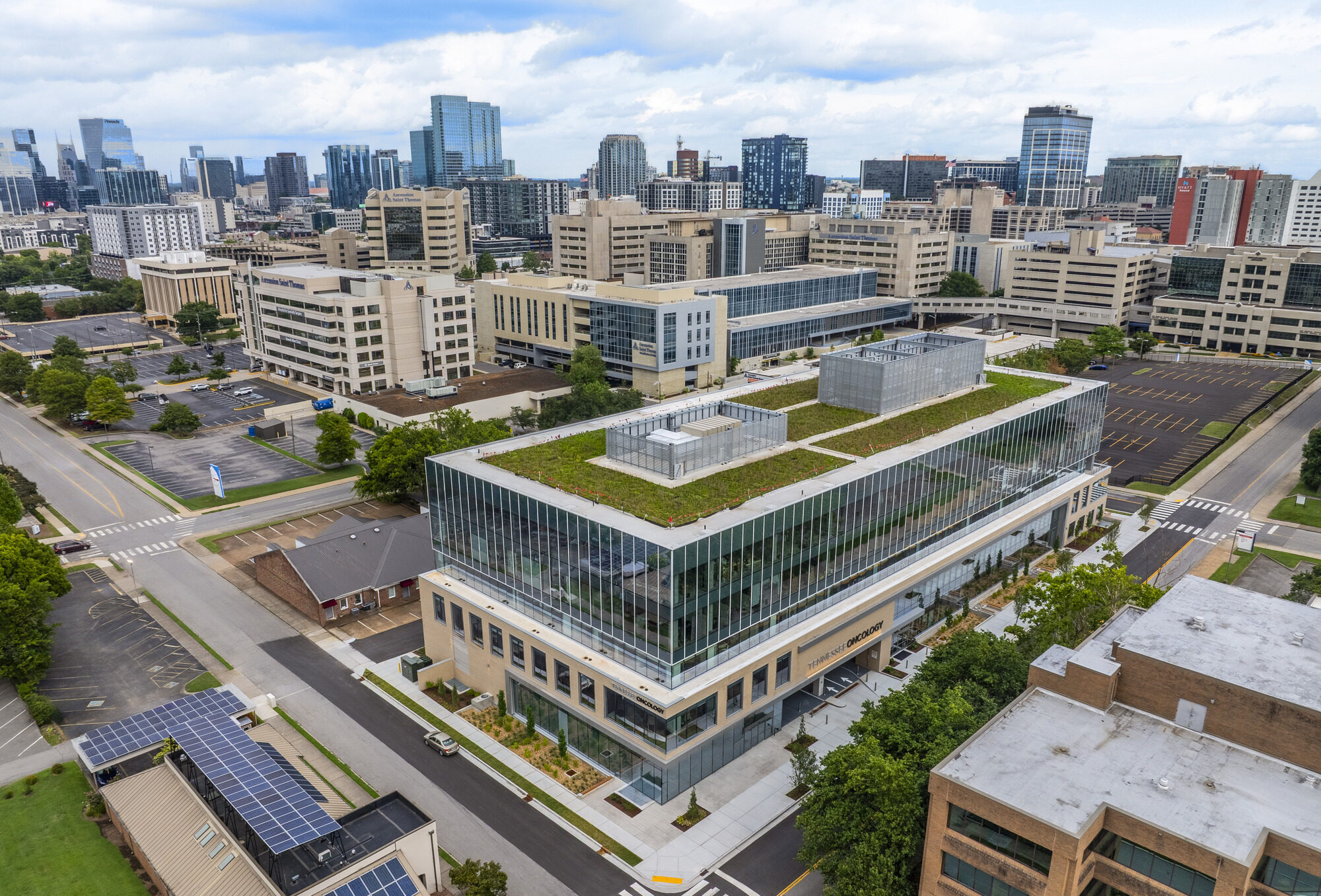
Strategically located between HCA’s Centennial Medical Center and Ascension Saint Thomas Midtown, the new $120 million, 310,000-square-foot building consolidates treatment, research, administrative functions, and supportive amenities into a single, vertically-integrated destination. Patients benefit from a full spectrum of outpatient oncology services under one roof, including specialty clinics, infusion therapy, imaging, a centralized lab, a cleanroom mixing pharmacy, and a full-service outpatient pharmacy. The facility also houses the Greco Hainsworth Drug Development Unit, expanding access to early-phase clinical trials across the region.
Urban Design that Supports Care and Community
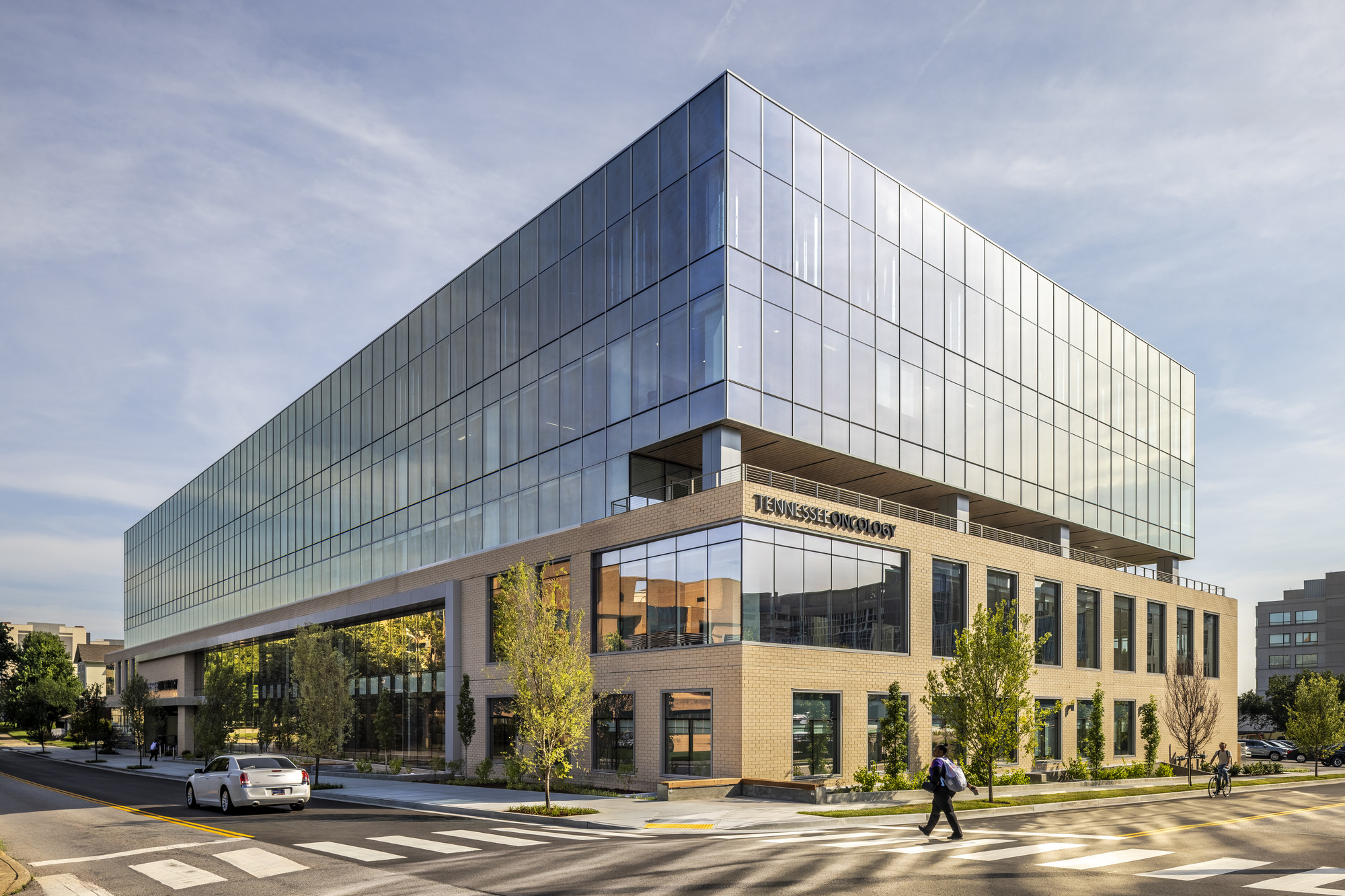
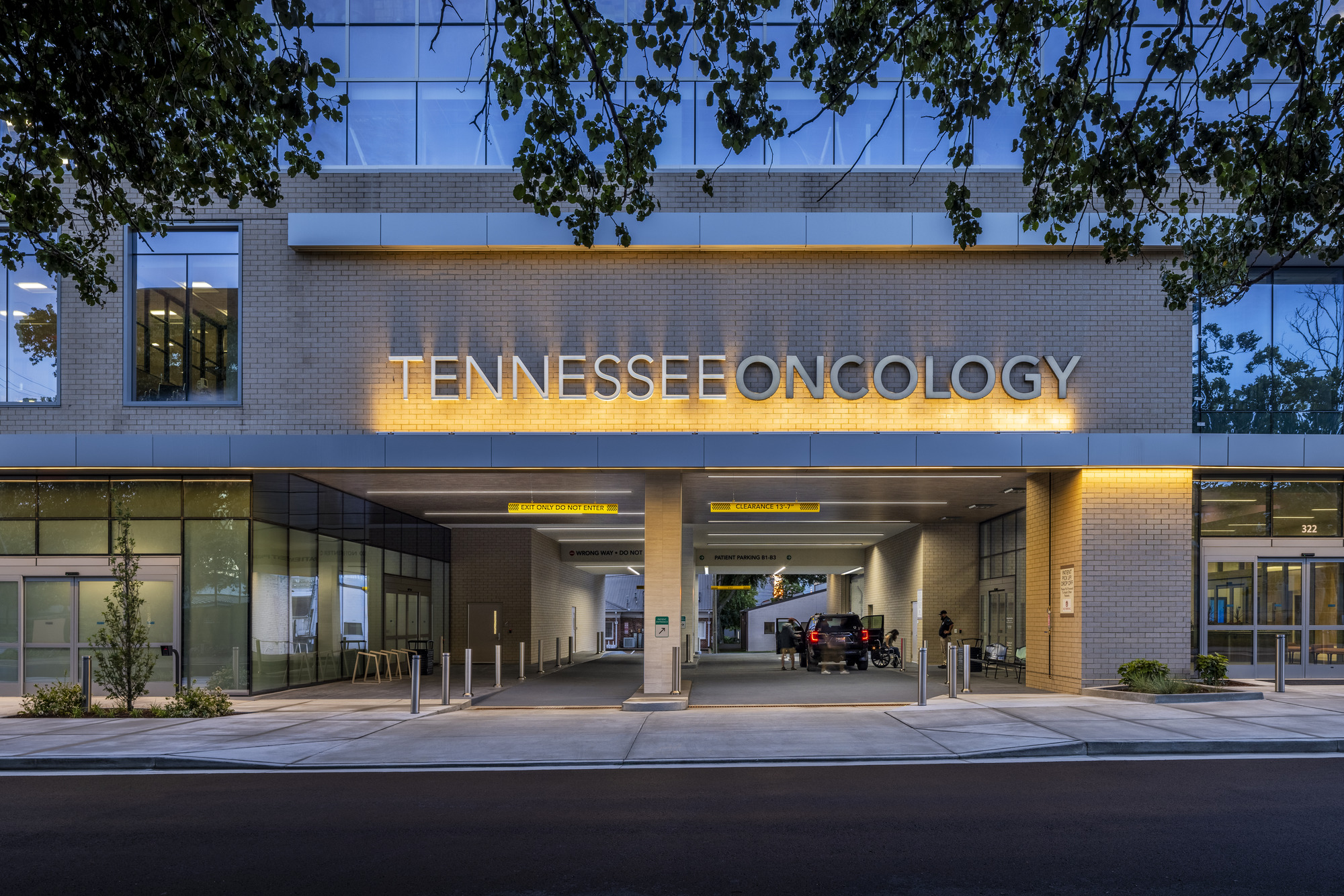
Situated on a compact site, the project takes full advantage of its urban location. The design strengthens community connection and walkability by prioritizing pedestrian access and street-level engagement. The building meets the sidewalk on every side and features multiple active entrances that support connections to the surrounding neighborhood and transit-oriented district.
A three-level underground parking garage provides patients with direct elevator access to treatment floors. This approach simplifies movement, reduces stress, and helps patients maintain a sense of calm from arrival through discharge. The site also includes space for future street-level retail and a café, bringing together healthcare, hospitality and convenience to serve patients and the larger community.

Reflecting the DNA of Nashville
The patient experience at Tennessee Oncology is inspired by the DNA of Nashville. Each patient floor reflects a distinct neighborhood—Downtown, SoBro, East Nashville and West End—through unique palettes, materials, and experiential cues that use color, light, and texture to set the mood and perceived scale. This approach brings authenticity, warmth, and a sense of familiarity to the care environment.
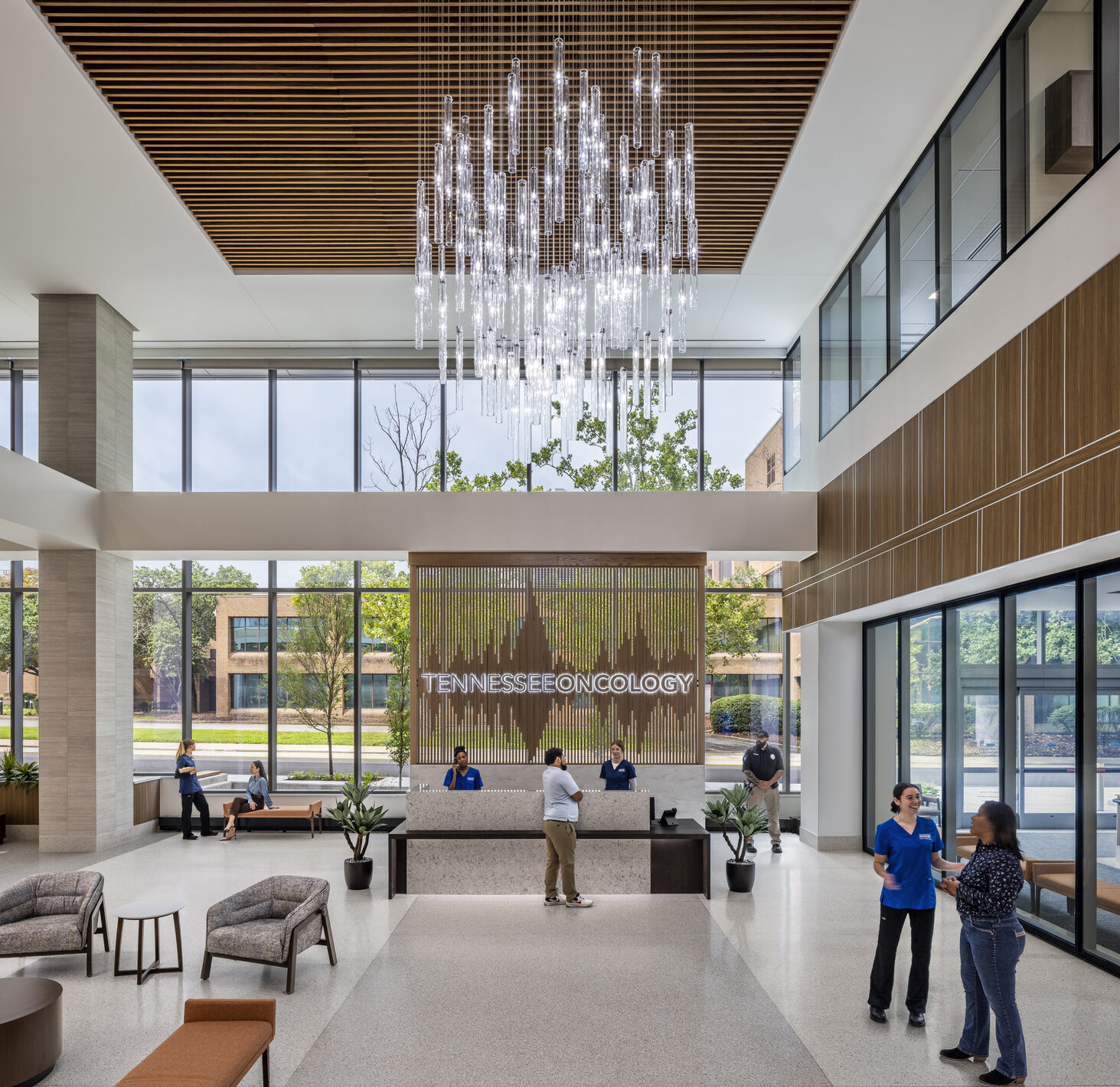
A signature slatted wood wall at the main reception softens daylight and creates a calm, tactile first impression. Overhead, a striking chandelier evokes the comfort of a living room and is visible from multiple spaces, serving as a visual anchor that enhances connectivity. Intuitive wayfinding complements the design, making navigation feel natural and seamless to reduce stress.
Through a partnership with Turning Art, the curated artwork package also draws inspiration from Nashville’s natural surroundings to promote a sense of calm and familiarity. A dramatic two-story installation in the main lobby captures the spirit of the city’s ongoing cultural evolution, and additional works by local artists celebrate Nashville’s creative roots. Together, these integrated elements of regional identity create an environment that is not only welcoming and accessible but also memorable and uniquely Nashville.


Designed for Choice and Comfort
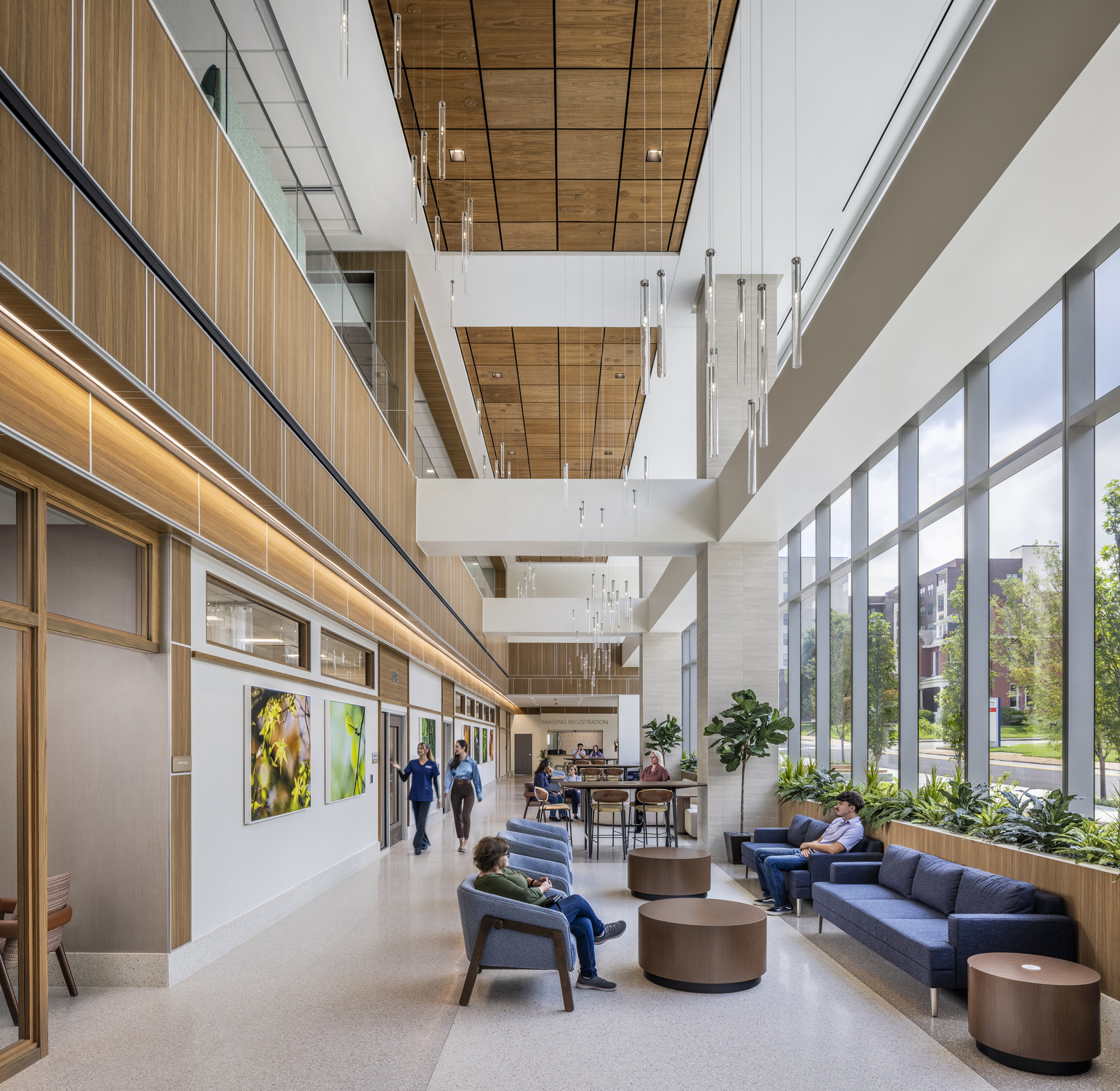
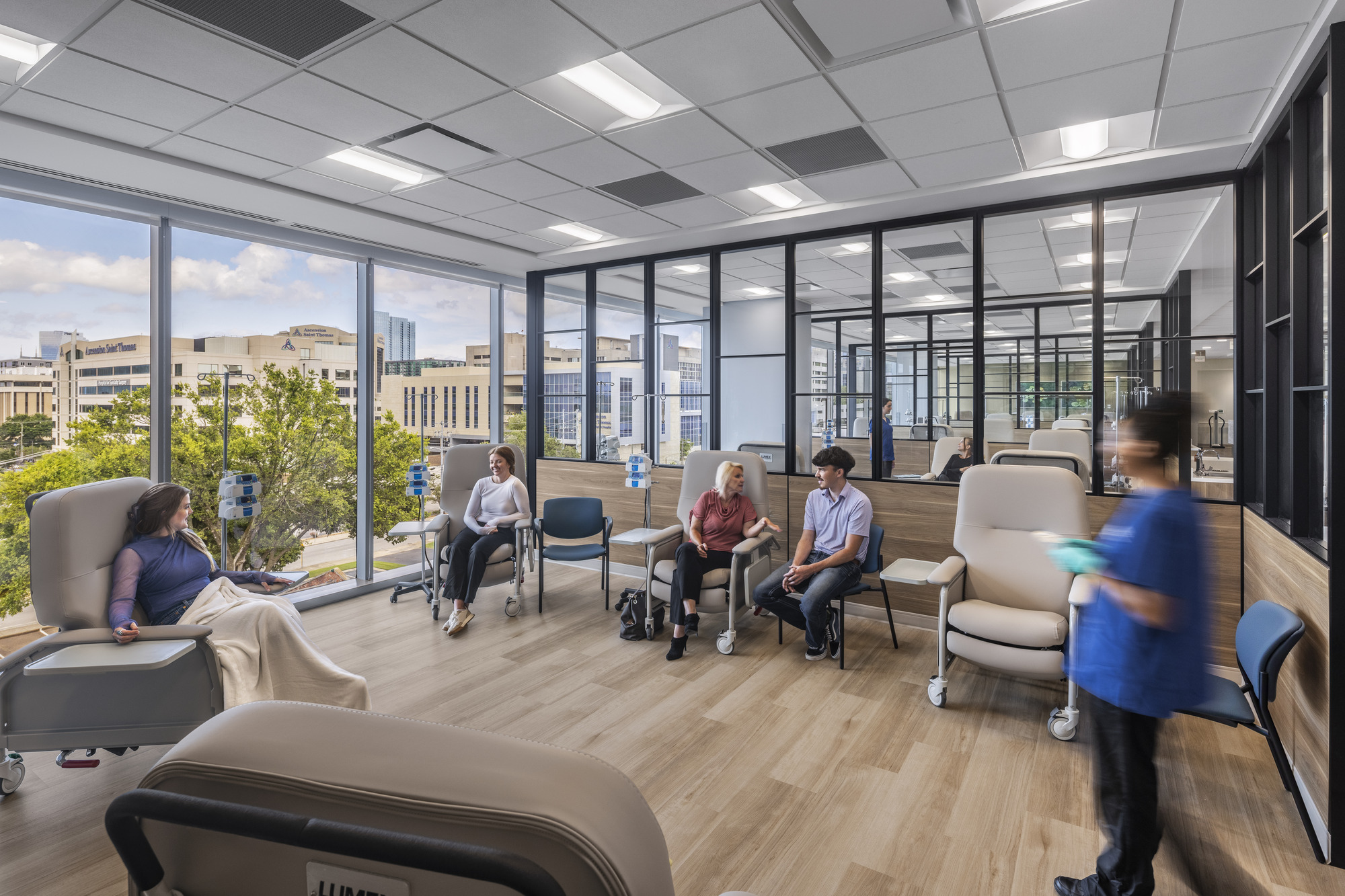
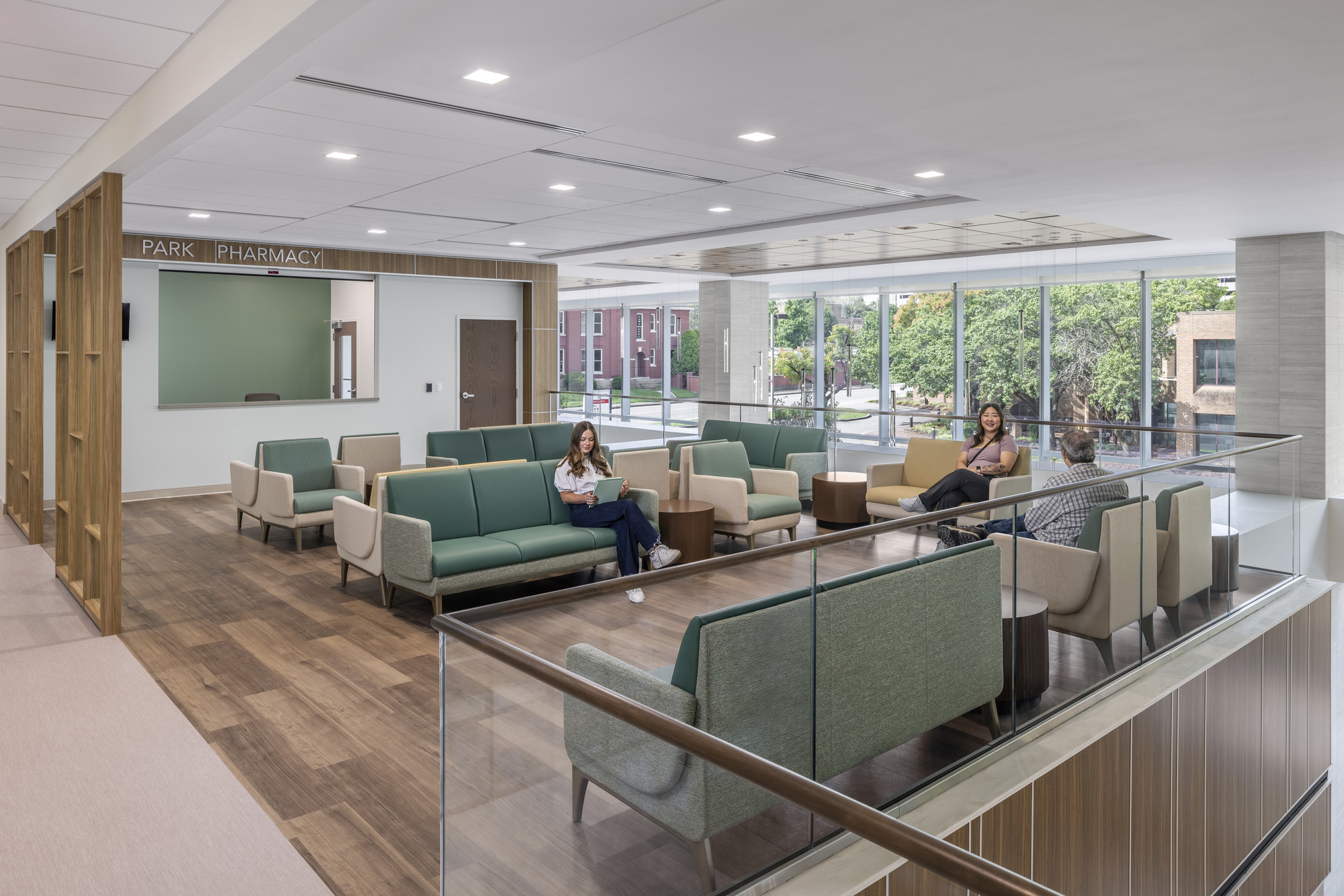
With a focus on choice and control, patients can personalize their care experience by selecting between shared or private infusion bays. Sociopetal seating is arranged to bring people together and encourage face-to-face interaction, continuing the theme of community within a personal healing journey. Light-filled waiting rooms and open corridors help reduce feelings of isolation and confusion. For clinicians, flexible workspace design allows for efficient charting and collaboration in areas that thoughtfully balance privacy with visibility. Staff can recharge on terraces and in team lounges designed to support wellness and restore energy throughout the day.
Layered security measures, including secured clinical zones, on-floor response rooms, entry-resistant glazing and staff alert systems, proactively address safety. The strategy supports an open and welcoming environment while protecting staff and patients in response to increasing national attention on healthcare worker safety.
Sustainable and Built for the Future
Sustainability elements are seamlessly integrated both visibly and functionally, enabling the building to perform efficiently while enriching overall quality of life. A planted green roof offers natural insulation and helps reduce the urban heat island effect. Bioswales and bioretention ponds integrated in the landscape design manage and filter stormwater at the surface, separating it from Nashville’s sewer system and mitigating overflows during heavy rains.
Biophilic elements are woven throughout the interior, blurring the line between outdoors and in to support well-being. Exterior landscaping flows inside via a living moss wall and integrated planters at the vestibule, while an expansive planter extends along the main concourse. Interior waiting areas include thoughtfully placed faux plantings to maintain greenery in low-light zones, with natural forms and foliage mirrored through curated artwork.
Designed with long-term adaptability in mind, the building’s structural and mechanical systems are equipped to support up to three additional floors. Universal room layouts and demountable partitions enable spaces to be reconfigured without disrupting care delivery. Shelled areas on the ground floor can accommodate additional clinics, retail offerings, or wellness-related services as the building evolves to meet future community needs.