
Note: This article first appeared in Building Design + Construction.
Why most office third spaces underdeliver and how leading buildings are rethinking design, operations, and tenant experience.
The modern office is undergoing a fundamental shift. As hybrid work reshapes how and when people use the workplace, traditional layouts are no longer sufficient to attract or retain tenants. In response, developers and building owners are investing heavily in third spaces.
The Office Isn’t Competing with Home. It’s Competing with Everything Else.
The office is no longer just competing with working from home. It is competing with coffee shops, coworking spaces and hospitality environments. These places succeed because they are comfortable, easy to use and offer a variety of settings that support different ways of working.
When given the choice, people often gravitate toward environments like coworking spaces or hotel lounges because they provide a more flexible and engaging experience than most traditional offices. That shift in behavior has raised expectations for what the workplace needs to offer.
To understand this, workplaces can be seen as three spaces:
1. The first is the traditional desks for focused, individual work.
2. The second is formal meeting rooms for structured collaboration.
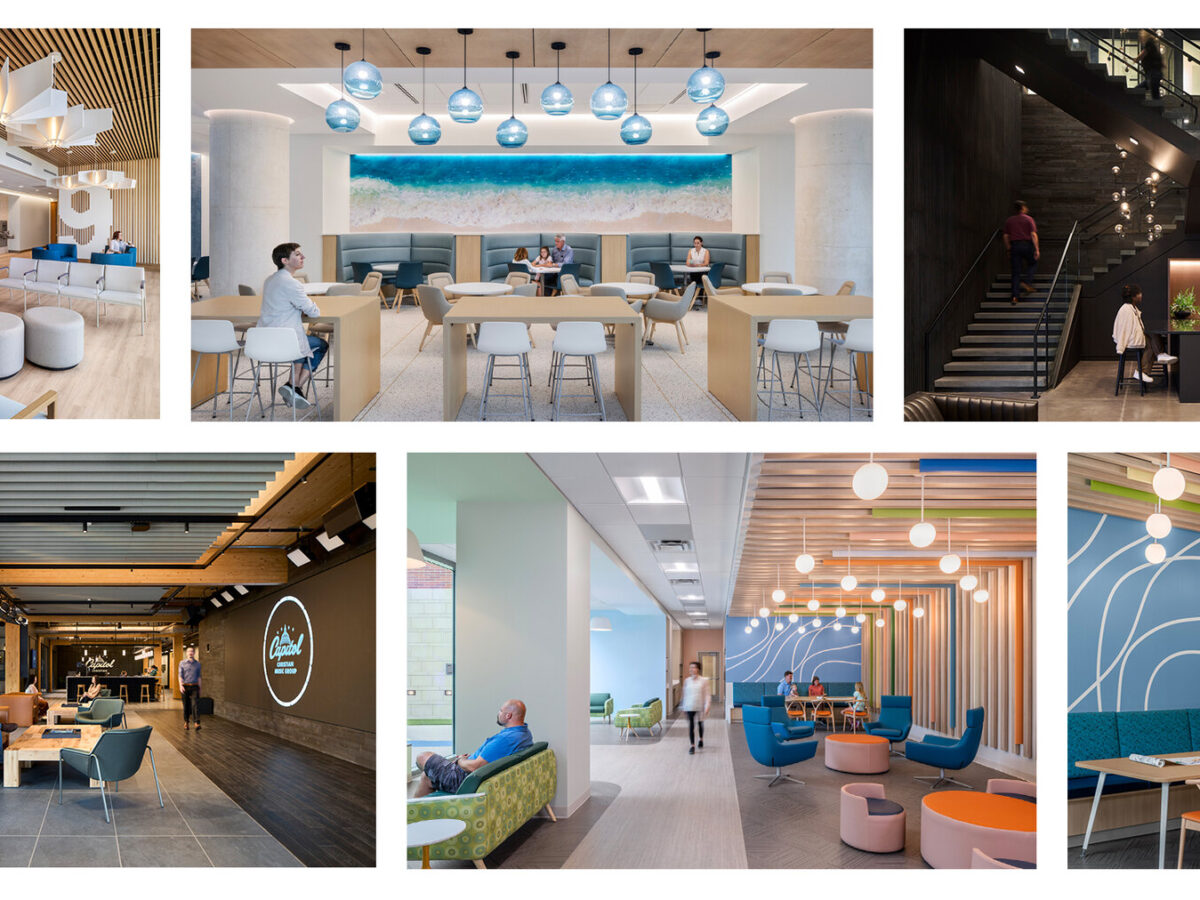
3. The third is comprised of flexible, hospitality-inspired areas. Think lounges, amenity floors and café-style spaces that encourage collaboration, socializing and alternative work modes; non-hierarchical spaces that support both work and social interaction. However, a clear gap exists between design intent and performance and over time they become underutilized or disconnected from how tenants actually work.
As new office inventory enters the market, providing a third space is no longer enough to differentiate a building. To remain competitive, these environments must be treated as active, behavior-driven assets that are designed and managed to perform over time.
1. Location Drives Utilization
Transformation starts with location. Placing a third space along main circulation paths keeps it visible, accessible and integrated into daily tenant activity. Spaces tucked away in quiet or disconnected areas tend to underperform. For example, a basement lounge struggled due to poor daylight and low visibility, but after moving it to the main lobby, it became a natural spot for arrivals, informal meetings and everyday use.
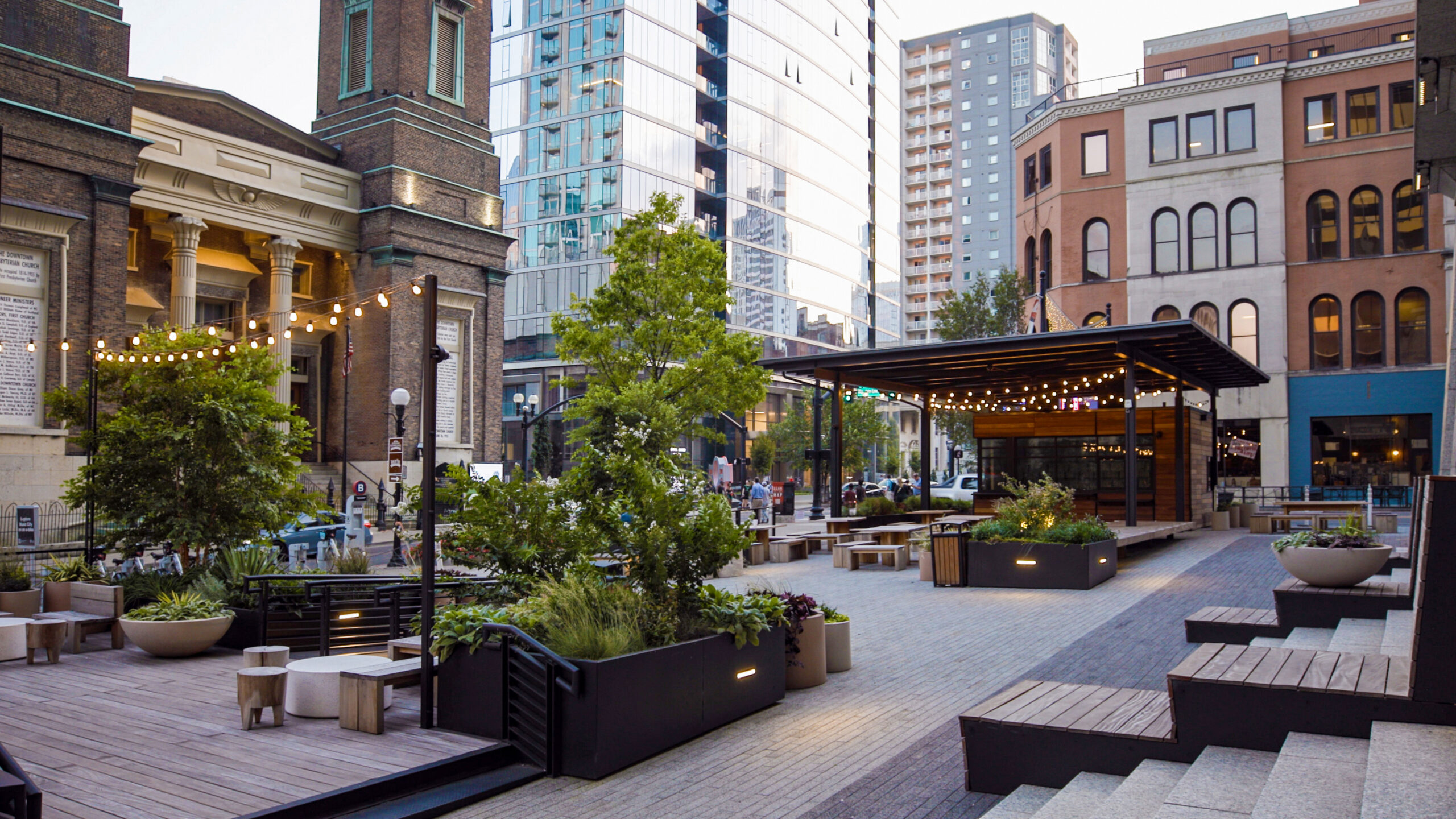
In contrast, activating an underutilized outdoor area at Fifth Third Plaza required a different approach. Elements such as shade canopies, landscaping and seating opportunities created a comfortable, welcoming space and the addition of a dedicated retail tenant turned it into a destination.
Key Takeaway: Plan your third spaces strategically with a defined purpose to drive utilization.
2. Function Is Defined by Performance
An attractive, well-placed space draws people in, but performance is key for long-term success. High-performing third spaces are designed as functional environments, not just gathering areas, requiring careful consideration of these three elements:
· Acoustics are critical yet often overlooked. With proper planning and zoning, these active spaces can support energy and interaction without becoming disruptive.
· Durability is equally important for high-traffic areas. Furniture and finishes must hold up over time or risk perception and usage decline.
· Infrastructure establishes the foundation for overall usability. Access to power, reliable Wi-Fi, adaptable lighting and flexible furniture all contribute to how effectively the space supports a range of activities. These elements should feel seamless, allowing users to transition between tasks without friction.
When aligned, these spaces support a variety of uses while maintaining comfort and functionality. Without these elements, even well-designed spaces struggle to maintain consistent use over time.
Key Takeaway: Prioritize durability, acoustic control and integrated infrastructure for consistent, long-term use.
3. Microenvironments
Collaboration is not one-size-fits-all, and a single uniform space does not support the full range of needs. While large, open lounges may seem flexible, they often fall short in accommodating how people actually work throughout the day by being too loud for concentration or too ambiguous to support productive collaboration. Third spaces need to support a variety of uses, from casual conversations and large gatherings to individual focus work and private calls.
High-performing spaces address this by creating a series of smaller, intentional micro-environments within a larger landscape. This might include open seating for social interaction, semi-private booths for group collaboration and quieter zones for focused work. This layered approach allows multiple activities to occur simultaneously without interfering with one another.
A repositioning project at a downtown office building, 211Commerce, illustrates this shift. An underutilized, oversized lounge was reconfigured into smaller, defined zones, with the addition of a movable wall to increase flexibility. Given the building’s limited amenity space, the environment adapted throughout the day, supporting both larger group functions and smaller, more focused uses, better aligning with the tenants’ behaviors.
Key Takeaway: Create a range of micro-environments so users can choose settings that match their needs, improving overall usability and long-term performance.
4. Specific and Branded for the Tenant
A well-designed lounge is no longer a building differentiator. What separates high-performing third spaces is relevance to context. These environments are intentionally aligned with the building’s identity, the surrounding context and the tenants they serve. When a space feels specific, it becomes more relevant and more likely to be used.
Programming such as events, tenant engagement and curated experiences reinforces that identity. A well-designed space without purpose often sits underutilized, while an actively programmed environment creates reasons for tenants to return.
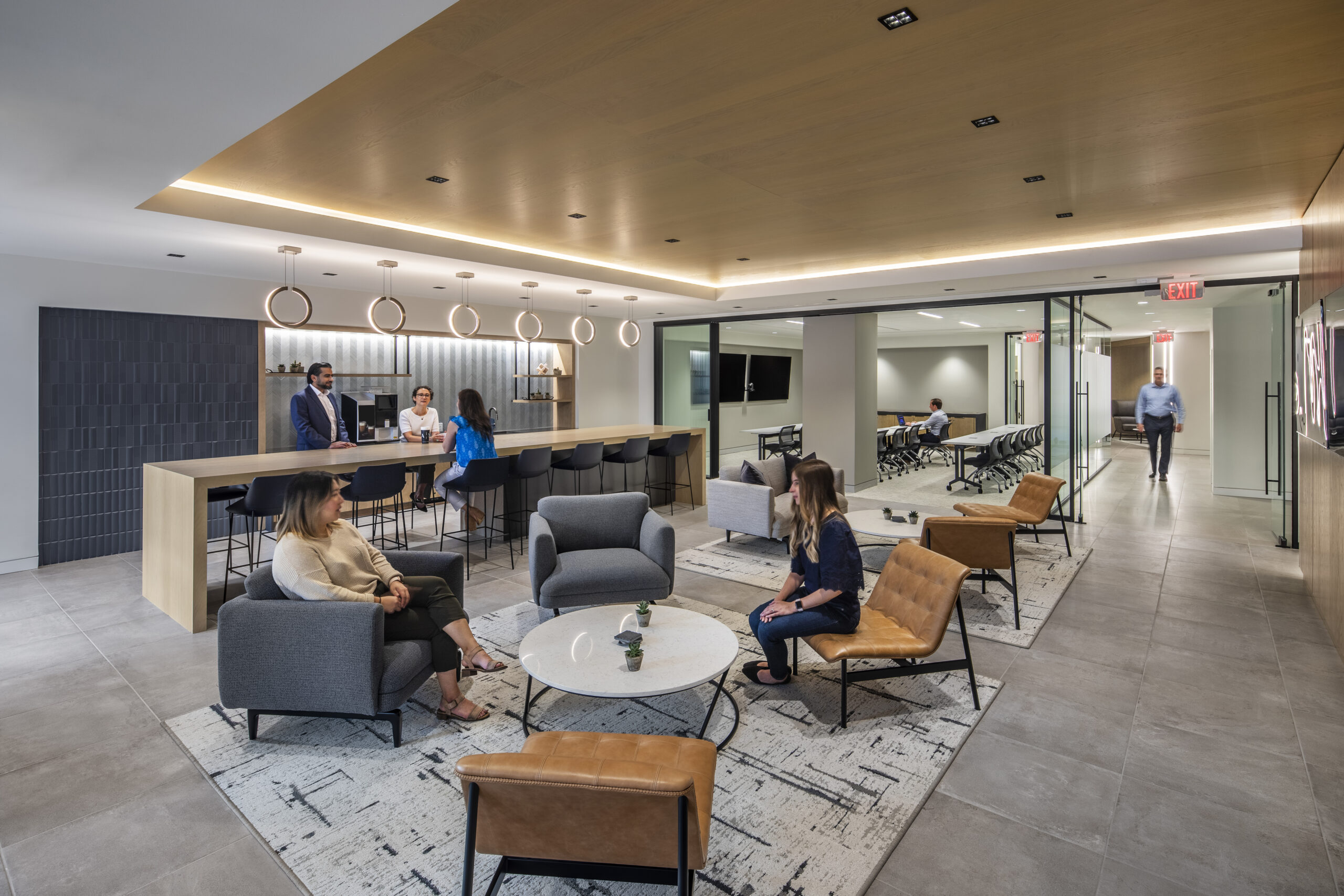
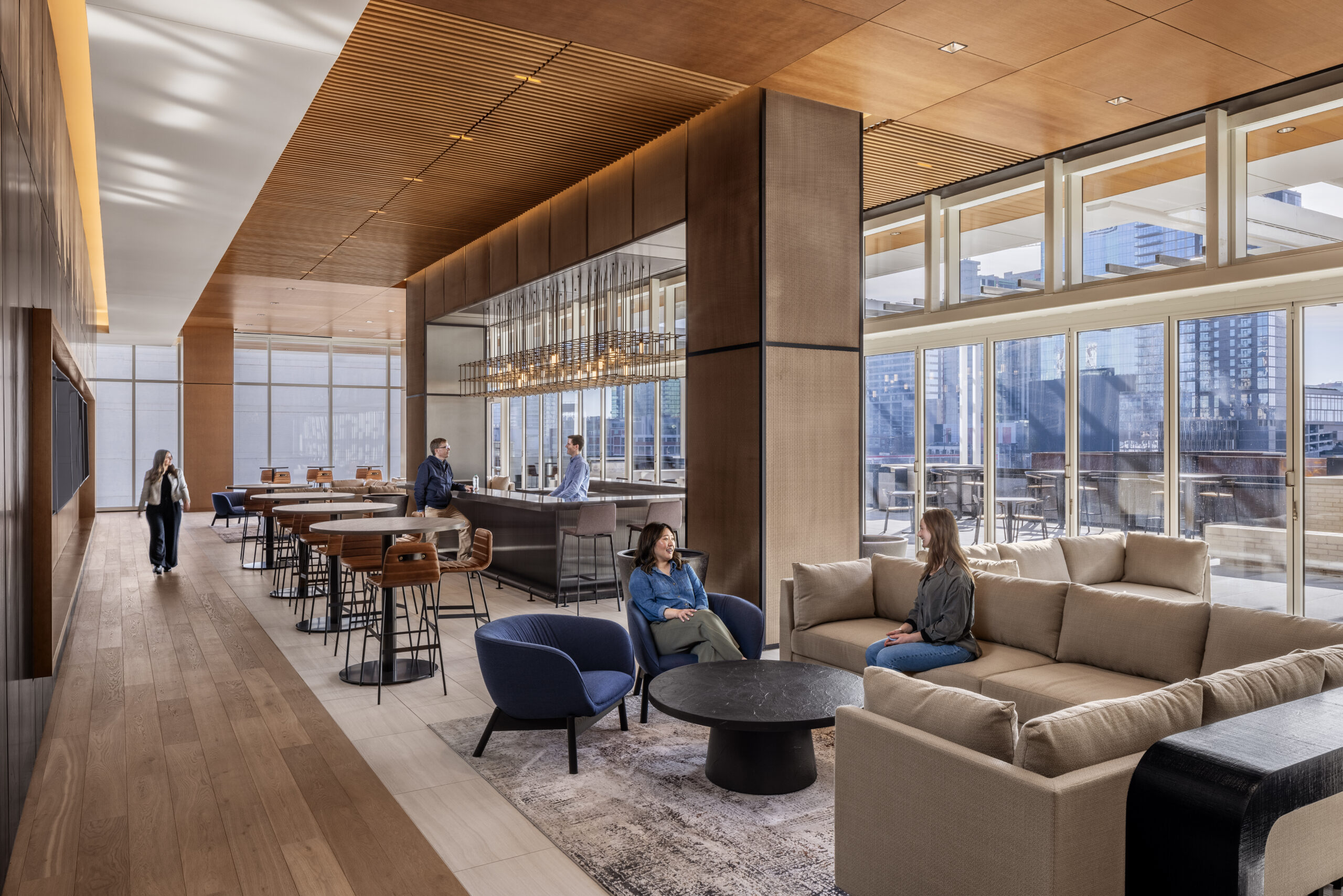
This approach is evident at Nashville Yards’ 35-floor mixed-use high rise, the Pinnacle Tower, where the amenity strategy was developed to attract professional services and financial firms. The third space is located on the second floor, providing visibility and connection to the campus while maintaining privacy for the building users. The space is organized around a central social bar, supported by a variety of seating for private conversations, and a dedicated conference area, allowing it to adapt throughout the day for both formal and informal use by these tenants and their clients while the outdoor balcony reinforces the building’s exclusivity for its users.
Key Takeaway: Establish a clear identity and support it with ongoing programming to ensure your third spaces remain active, relevant and aligned with tenant needs.
5. Amenity to Hospitality
How a third space is operated is just as important as how it is designed. High-performing properties approach these environments with a hospitality mindset, where service, management and daily experience are considered alongside design. This includes concierge-style support, consistent maintenance, integrated food and beverage and ongoing tenant engagement.
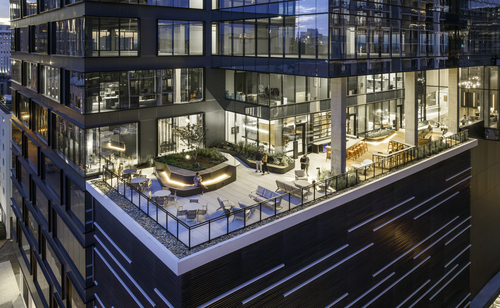
The Moore Building, an amenity-rich, multiuse office tower, illustrates this shift. A 17-story office building on Music Row, it redefines the traditional lobby experience by relocating it to an eighth-floor sky lobby. The ground level functions as a simple entry and elevator point, while the primary tenant experience happens above.
Because tenants move directly from parking to their floors, this elevated lobby is not part of the daily circulation. Instead, it operates as a destination within the building. The space is designed as a shared amenity hub, featuring a micromarket, conference center and a variety of lounge environments, with direct access to an outdoor roof deck that extends the experience.
Security plays a key role in how the space functions. Rather than acting as a traditional checkpoint, it operates more like a concierge, supporting tenants with day-to-day needs and enhancing the overall experience. This approach shifts the perception of the space from transactional to service-driven.
The environment aligns with a high-end residential or hospitality setting rather than a conventional office lobby. It provides a level of comfort, flexibility and exclusivity that encourages tenants to use it intentionally.
Key Takeaway: Operate third spaces with a hospitality mindset by integrating service, management and amenities to create a destination that supports consistent use and long-term value.
6. Match the Model to the Building
Not all third spaces are the same. Every building, tenant group and location brings a different set of needs, and the strategy must respond accordingly.
In multi-tenant buildings, third spaces often function as shared hubs. They need to appeal to a wide range of users, support leasing and retention and create a sense of community across tenants. These environments are typically designed for flexibility and broad usability, balancing different work styles and expectations within a single space.
In contrast, single-tenant headquarters can be more targeted. Third spaces should be tailored to reflect company culture, support specific workflows and align with defined business goals. The challenge is not flexibility alone, but how to create spaces that feel intentional and relevant to a specific user group.
This distinction becomes even more important in suburban campuses, where the surrounding context plays a larger role. Unlike urban environments, where amenities are often within walking distance, suburban sites require a more deliberate approach. Understanding what is missing in the immediate area and filling those gaps becomes a key part of the strategy.
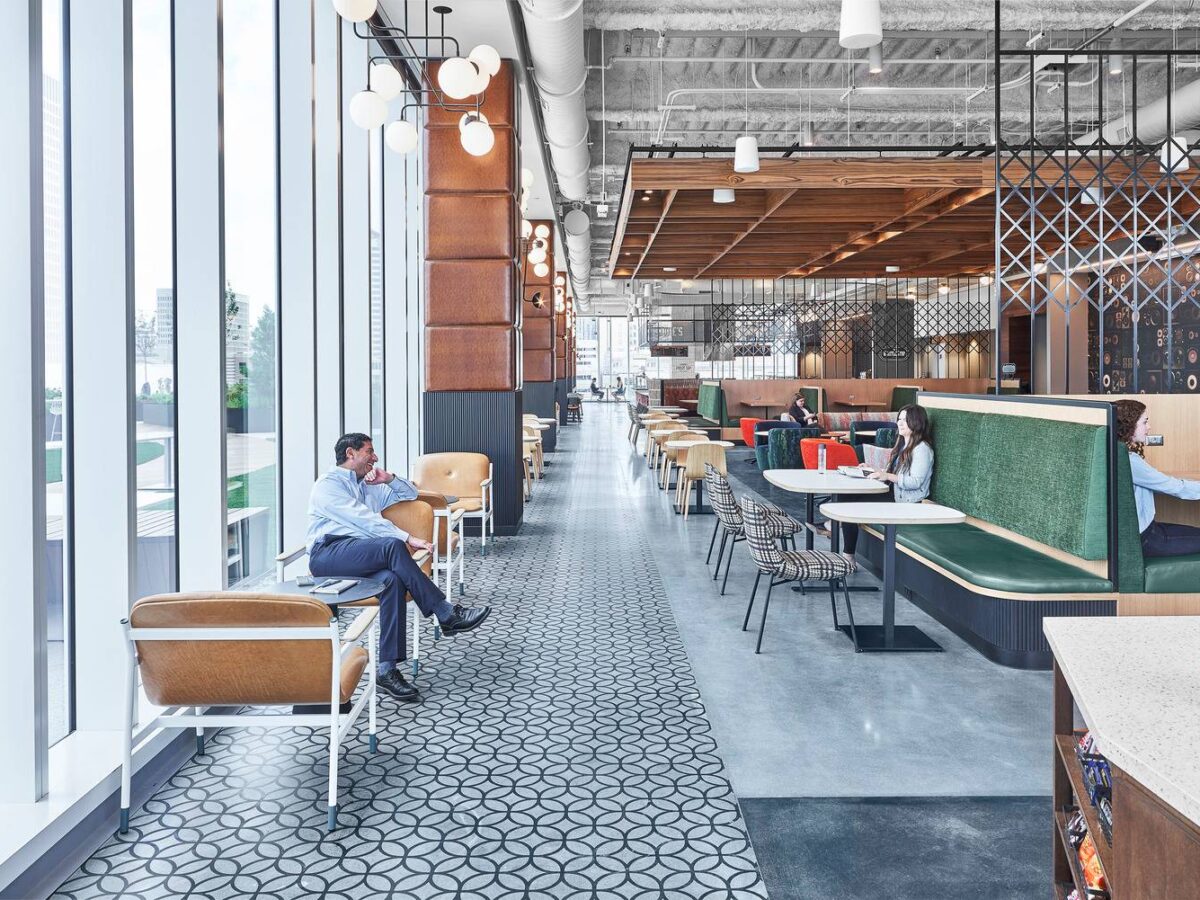
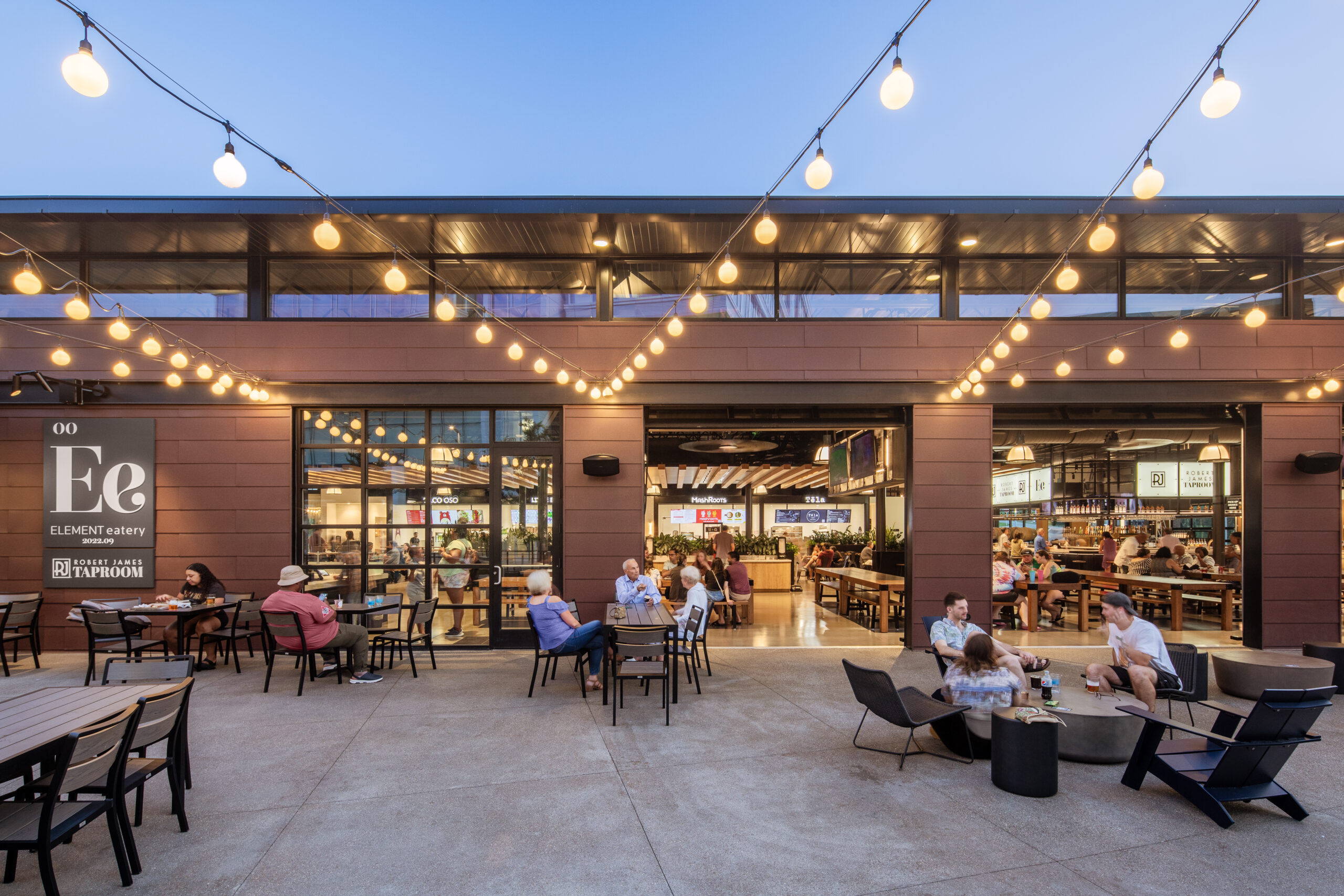
Medpace and its growing three-building headquarters campus moved beyond a traditional corporate café and instead introduced a food hall. This decision was driven not only by tenant needs, but also by the surrounding context, which lacked accessible dining options. The result is a space that serves multiple purposes, supporting employees throughout the day as a place to gather, work and connect and a destination for the broader community on evenings and weekends.
By aligning the needs of the workplace with the surrounding community, the space becomes more than an internal amenity. It becomes a shared asset that strengthens both the campus and its context. Projects like this demonstrate that there is no single model for third space. The most successful environments are those that respond directly to their building type, tenant profile and location, rather than relying on a standardized approach.
Key Takeaway: Align your third space strategy with your building type, tenant profile, and surrounding context to create environments that are relevant, well-used and positioned for long-term success.
At the end of the day, it comes down to one question: Why would someone choose to spend time here instead of anywhere else? It is not just the building down the street to consider, it is coffee shops, coworking environments and the option not to come in at all. The properties that outperform treat third spaces as strategic and actively managed assets, measuring their success by consistent use, how well the space supports tenant needs and the role it plays in leasing and retention.
To remain competitive, third spaces must move beyond being an amenity and perform as a true asset to the building.
Laurel Harrison, NCIDQ, IIDA, LEED AP, is a project executive for Gresham Smith’s Life and Work Places in Nashville with over 20 years of design leadership background. Her experience in commercial interiors is highlighted by her portfolio of purpose-driven designs, ranging from sustainable corporate headquarters to non-profits to top Am Law 100 firms and Fortune 500 companies. Her extensive background allows her to bring a rich understanding of diverse design cultures to each project. Committed to creating designs that have a meaningful impact, she balances aesthetics and functionality to enhance user experience and meet clients’ strategic objectives.