
This post marks the second edition of our Traffic Safety blog series, where we’ll explore how Gresham Smith is applying forward-thinking to help clients achieve their vision of eliminating roadway fatalities and serious injuries.
Summary
- Applying Safe System thinking includes following the principle that safety should be proactive and that roadway designs should implement measures to prevent the most serious conflicts from occurring. By assessing traffic safety through the lenses of conflict exposure, crash likelihood, and outcome severity, roadway design alternatives can be evaluated to help transportation agencies achieve their long-term safety goals.
- New methods and tools for assessing traffic safety performance are evolving, including methods that utilize surrogate metrics for safety assessment. Many transportation agencies follow long-established guidance for scoping and conducting the safety analysis component of a project study. Although this practice helps provide consistency across numerous project studies, an unintended consequence may be that newer safety assessment methods are precluded from use, reducing the intended benefit of a study.
- The fundamental intent of the safety analysis component of a project study is to guide project design decisions that may influence safety performance. Before jumping directly into the number-crunching of data, it is important to begin by first identifying the safety-related questions we want the analysis to address. Although this sounds simplistic, it is arguably the most overlooked step in a project study.
In the first edition of our Traffic Safety blog series, we sat down with Mark Doctor, a senior engineer in Gresham Smith’s Transportation market, to explore changing perspectives regarding traffic safety and the advancement of Safe System thinking. With over 37 years of experience in transportation engineering, including 20 years in his previous role as a senior safety and design engineer with the Federal Highway Administration, Mark offers valuable insights. In this second edition, he explores how thinking differently about traffic safety translates to a sharpened focus for conducting a safety study on a proposed roadway design project.
Q: Let’s start with a basic clarification. What does it mean to assess safety in road project design?
Mark Doctor: Safety is a consideration in most every phase of the transportation project development process, but it is in the earlier stages of concept development and preliminary design where there are greater opportunities to implement features within projects that can meaningfully reduce the likelihood of roadway fatalities and serious injuries. Assessing safety performance in design is about applying various methods to quantitatively examine the differences among project alternatives, or optional design features within alternatives, that may reduce crash frequency and severity.
Q: Your previous article offered perspectives on Safe System thinking. How can Safe System thinking be applied in the design of a road project?
Doctor: One of the core principles to Safe System thinking is that safety should be proactive. That means ‘building in’ safety through roadway design and operational practices that both eliminate the most severe traffic conflicts and promote vehicular travel speeds that are safe and appropriate for the context and type of roadway facility being designed.
Q: For clarification, what is a traffic conflict?
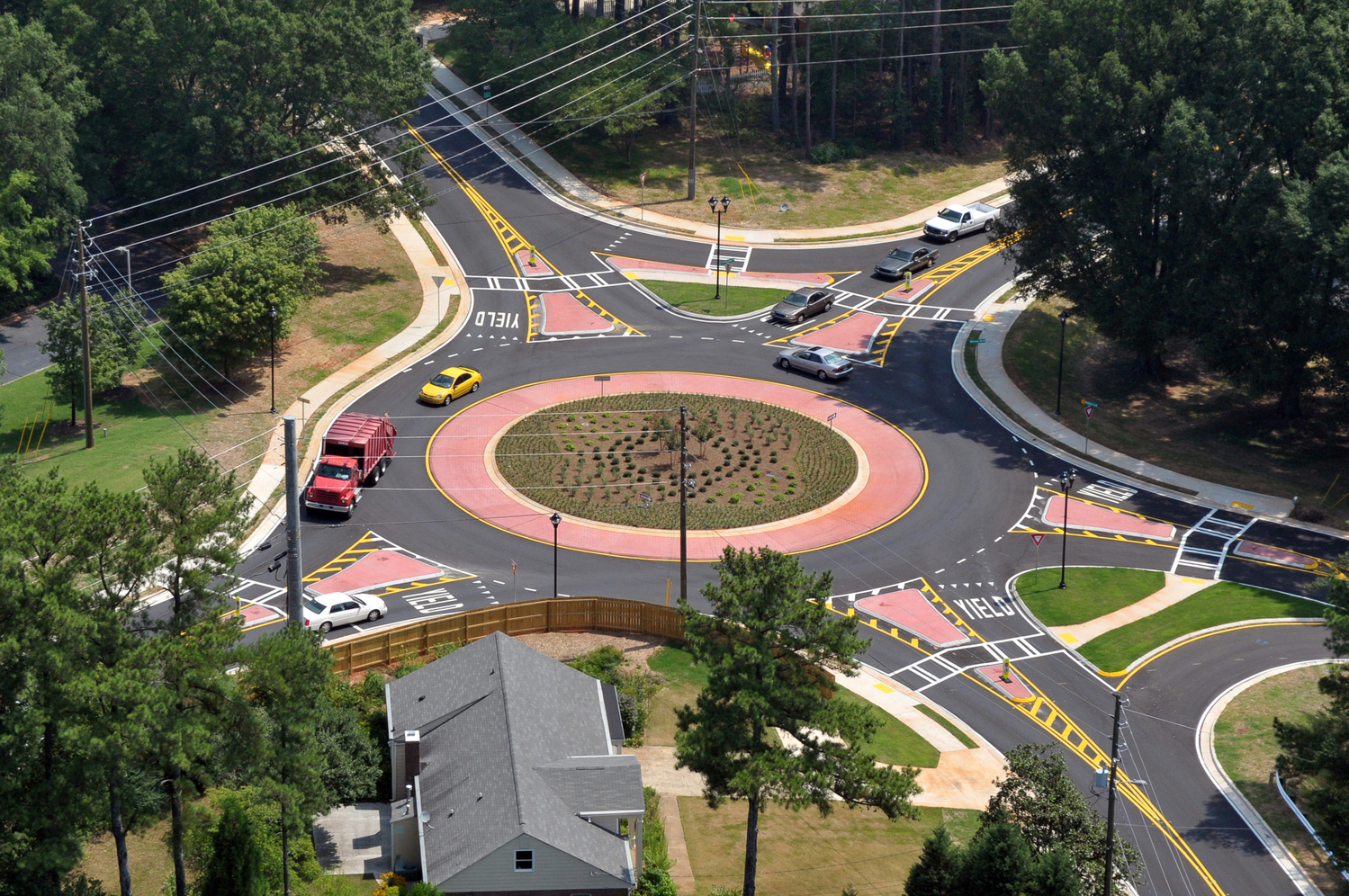
Doctor: A traffic conflict, or conflict point, can be thought of as any location where two or more road users approach each other in space and time under normal traffic operating conditions. An intersection is an example where multiple traffic conflict points exist. Collisions between road users are mostly avoided because either a traffic control device, such as a stop sign, yield sign or traffic signal, directs road users to take a specific action, or there is a traffic law establishing the correct action, such as when a driver enters or crosses a roadway from a driveway and they must yield to all vehicles already on the road. It is when a road user violates a traffic control device, or makes an unlawful maneuver, that a collision may result.
Another way to think about a traffic conflict point is that it represents the potential for a crash to occur if a road user makes a mistake. Another core principle of Safe System thinking is to acknowledge that road users will inevitably make mistakes, and those mistakes may lead to crashes. That’s why it is so important to be proactive and “design out” the more severe traffic conflicts.
Q: Is traffic conflict assessment a new approach in road safety?
Doctor: The concept of assessing traffic conflicts as a proactive method to consider road safety has been in use for decades. What is new is assessing traffic conflicts through the lenses of conflict exposure, crash likelihood, and crash outcome severity.
Exposure involves assessing crash potential through metrics such as road user numbers (i.e., traffic volumes and pedestrian counts) and the distance or duration of exposure (i.e., pedestrian crossing distances). Examining traffic conflicts using measurable exposure factors helps prioritize where greater attention toward eliminating conflicts is appropriate.
Likelihood refers to assessing certain road conditions or factors that have been demonstrated to affect the probability of a crash occurring. These factors are often associated with conditions that add complexity to the decision-making needs of road users. A common example is when a driver is turning left at an intersection and must judge the gaps in oncoming traffic. The complexity is greatly increased when there is more than one lane of oncoming traffic and when vehicle speeds are high. Strategies such as using a “protected-left turn” (green left-turn arrow) signal indication reduce the potential for fatal and serious injury crashes.
If a crash does occur at a conflict point, the severity of the outcome depends on the levels of crash kinetic energy transferred to the human body. Safe System thinking places particular emphasis on avoiding fatal and serious crashes. By including crash outcome severity as an assessment factor, traffic conflicts with a low probability of injury if a crash occurs become less of a priority. Assessing traffic conflicts through metrics tied to exposure, likelihood, and crash severity is a great example of how applying Safe System thinking in design can help transportation agencies achieve their long-term safety goals.
Q: What kinds of challenges exist with applying these safety assessment methods?
Doctor: Many transportation agencies follow long-established guidance for scoping and conducting the safety analysis component of a project study. Although this approach helps provide consistency across project studies, an unintended consequence may be that newer safety assessment methods are precluded from being used.
There are multiple safety analysis methods and tools that can be applied to fit projects of different sizes, scopes, and objectives. Depending on the project type, multiple safety analysis methods may be needed to answer the safety-related questions for a project.
Q: Do you have any additional suggestions for enhancing a road design safety assessment?
Doctor: I’ll conclude with one final thought. Since most roadway projects include some form of safety analysis, I’m concerned that the process often becomes rote, and we may sometimes lose sight of the study’s intent. The fundamental purpose of a project safety analysis is to help guide project design decisions that may influence safety performance.
I think it is helpful to differentiate a true analysis from merely categorizing data or running computations. It seems that some studies focus on collecting large amounts of data only to summarize vast quantities of information without translating it into clear insights for meaningful project decision-making.
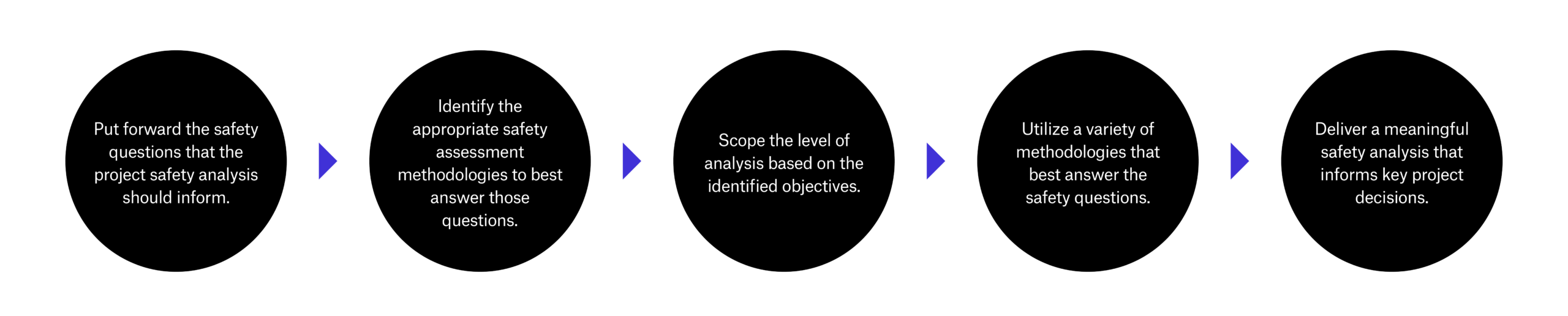
My suggestion is that, before jumping directly into the number-crunching of data, it is important to start by first identifying what safety-related questions we want the analysis to inform. Although this sounds very simplistic, it is arguably the most overlooked step in a project safety study.
By first knowing what safety-related questions we want the safety analysis to answer, we can then identify the appropriate methods and tools to address those questions. This also helps to appropriately scope the level of analysis rather than relying on a one-size-fits-all approach. The aspects of a safety analysis for an individual project may vary with the scope and complexity of the overall project. I suggest beginning by identifying the critical issues and project design decisions that we want the safety analysis to help inform.
The real value of a safety study is when the analysis helps inform key project decisions. But those important safety-related questions must be known prior to scoping the study effort so that the appropriate methodologies and tools may be applied. The flowchart below summarizes the steps that can be taken to produce a meaningful safety analysis that informs project design decision-making.
Mark Doctor joined Gresham Smith in 2025 as a senior engineer and technical advisor following a long career with the Federal Highway Administration (FHWA). In his last position with the FHWA Resource Center, Mark advanced national practices on performance-based design, innovative intersections, and applications of a safe system approach. Doctor is a passionate traffic safety advocate with experience relating Safe System principles into practical applications for road and intersection designs. In his role at Gresham Smith, Doctor enhances client services in our transportation market across multiple office locations