

Air travel is surging—and so is traveler anxiety. A 2023 report from The Hill found that 40 percent of Americans feel stress about flying, and roughly 5 percent avoid it altogether. That tension is often amplified by the very places meant to help—airports.
At Gresham Smith, we believe design can do more than move people—it can calm them. When architecture, environmental graphics and digital systems work together from the start, airports become places where clarity leads and confidence follows.
Below, we share how thoughtful, integrated design transforms one of the most complex public environments into one of the most intuitive.
Designed From the Inside Out
Great wayfinding starts long before the signs appear. It isn’t an added layer but a framework that shapes how people navigate space.
At Charlotte Douglas International Airport, that inside out mindset guided every decision in the Wayfinding Master Plan. With more than 50 million passengers annually, 80 percent of them connecting, CLT needed a system that could deliver clarity amid constant movement.

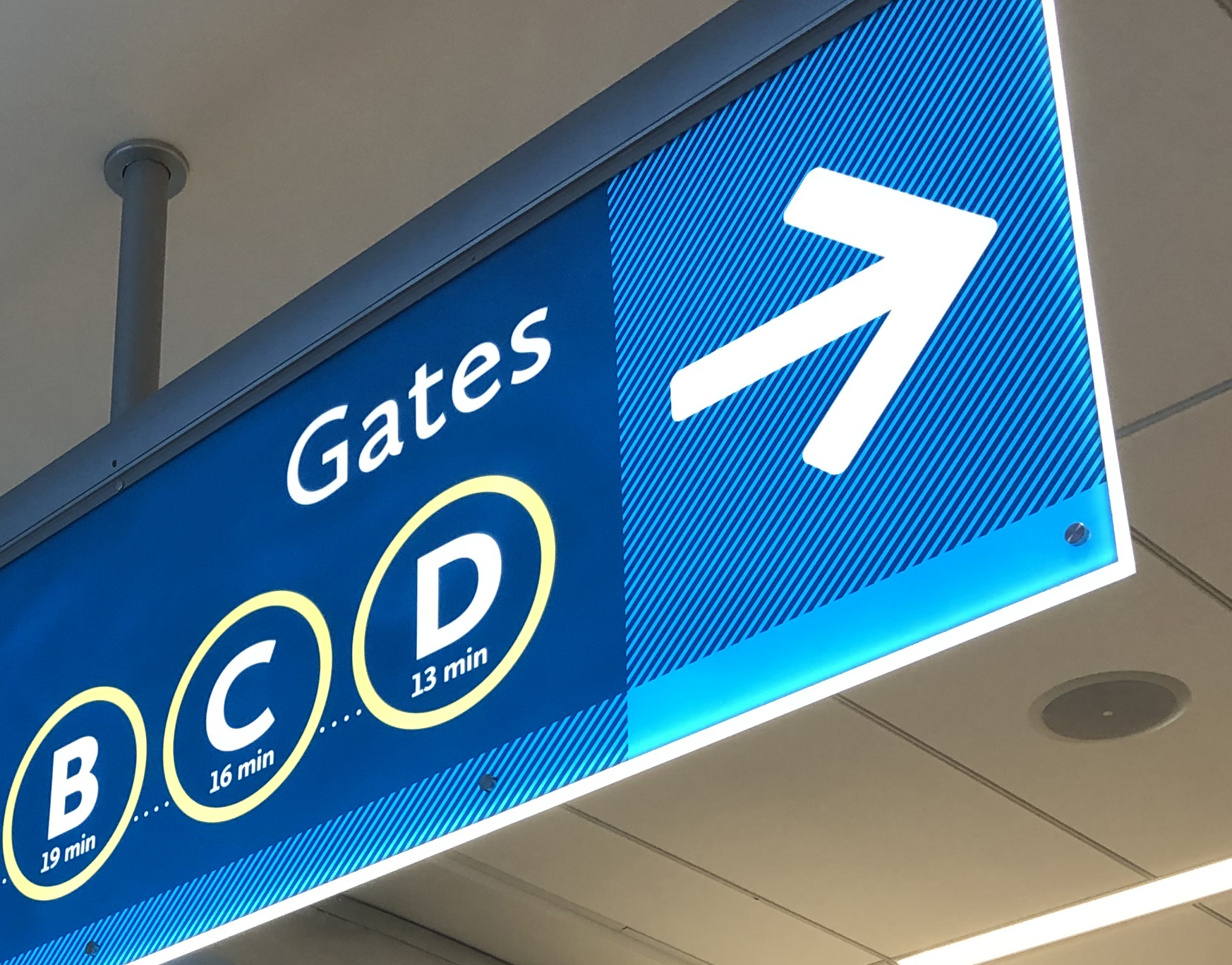
Drawing on 2,000 passenger surveys, extensive observation and research from ACRP Report 52 (written by our team), we identified moments of stress and confusion along the passenger journey. One insight stood out: Travelers consistently overestimated the time associated with walking distances. We responded by integrating real–time walk time indicators, improving sightlines, and clarifying decision points.
When designing the subsequent terminal lobby expansion, architectural moves such as consolidating five alpha coded security zones into three numeric ones simplified choices and reduced cognitive load. Materials, lighting, color-coded portals and vertical beacons reinforced a universal logic that travelers can feel—even if they never consciously notice it. When movement feels instinctive and information appears at just the right time, the design is working.
Technology That Moves People
Technology isn’t just a tool; it’s a lens for understanding how design decisions will perform in real time.
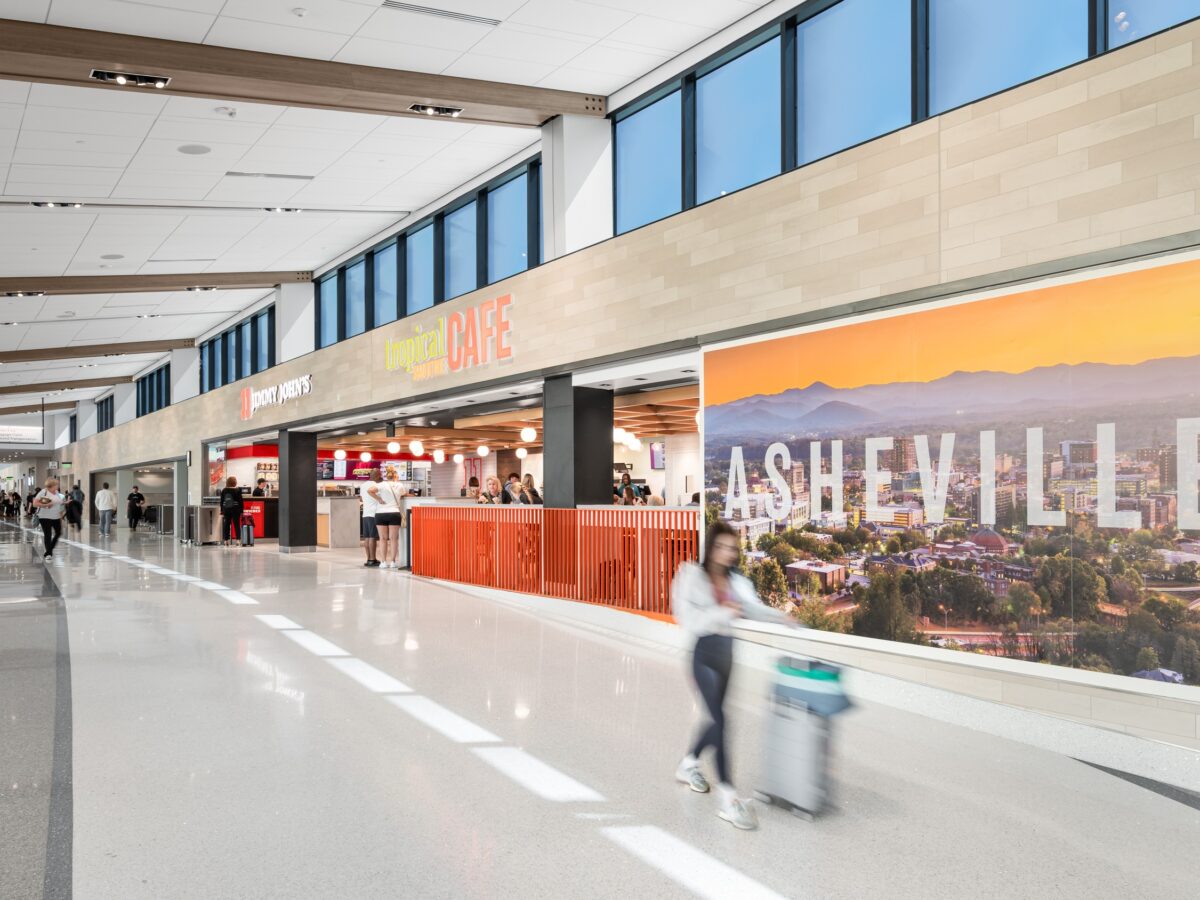
At Asheville Regional Airport, advanced 3D modeling and behavioral simulations allowed our team to test passenger movement before construction began. We evaluated sightlines, circulation patterns, and decision points to refine every step of the curb to gate experience. That analysis informed major design decisions, from the two-story terminal to the six-lane security checkpoint and 12-gate concourse, ensuring that the architecture itself guides travelers forward.

As airports become more digitally driven, consistency between the physical and virtual worlds is essential. Realtime flight data, reroutes during construction and mobile navigation apps now complement the built environment. Our design connects those systems, so travelers receive unified, reliable information whether they’re glancing at an overhead sign or checking their phones.
Aviation changes fast. By building flexibility into signage systems, lighting networks and data interfaces, we help clients evolve without losing clarity or brand identity. Through decades of practice and multiple contributions to FAA/ACRP wayfinding research, we’re helping airports stay both human centered and future ready.
Access for All Travelers
Airports never stand still as construction reshapes path, operations shift by the hour, and passenger needs change with every flight. In that constant motion, accessibility can’t be an afterthought; it must be woven into every moment of the journey.
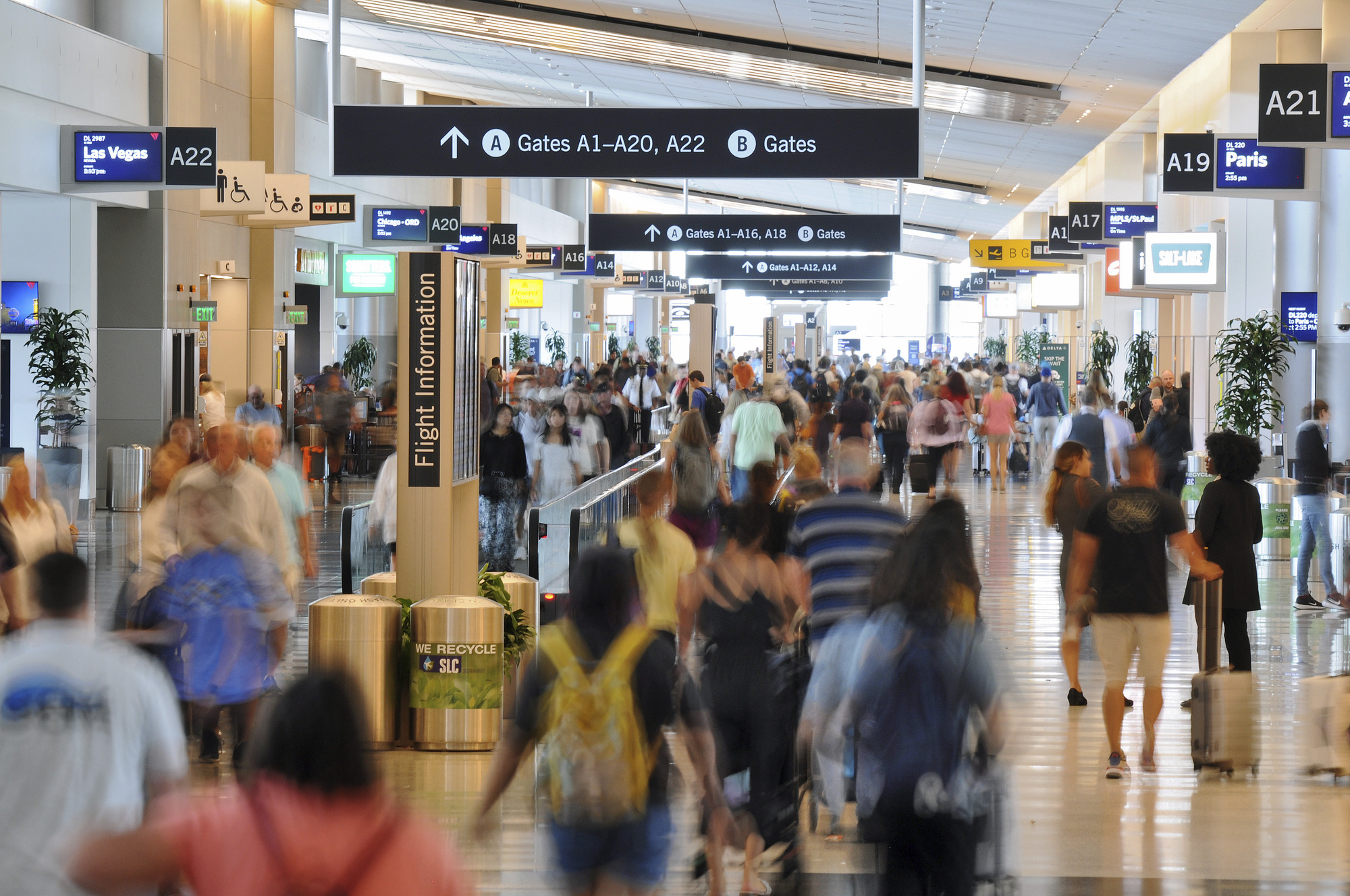
At Salt Lake City International Airport, we made accessibility a shared mission from day one. Together with the airport team, we reimagined how travelers move, orient and connect. Centralized InfoHubs, updated dynamic security headers and interactive digital maps now make accessible routes as visible and intuitive as gate numbers. Illuminated elevator flags glowing above the crowd solve a challenge every traveler understands: finding elevators that technically meet code but are nearly impossible to spot in a busy terminal.
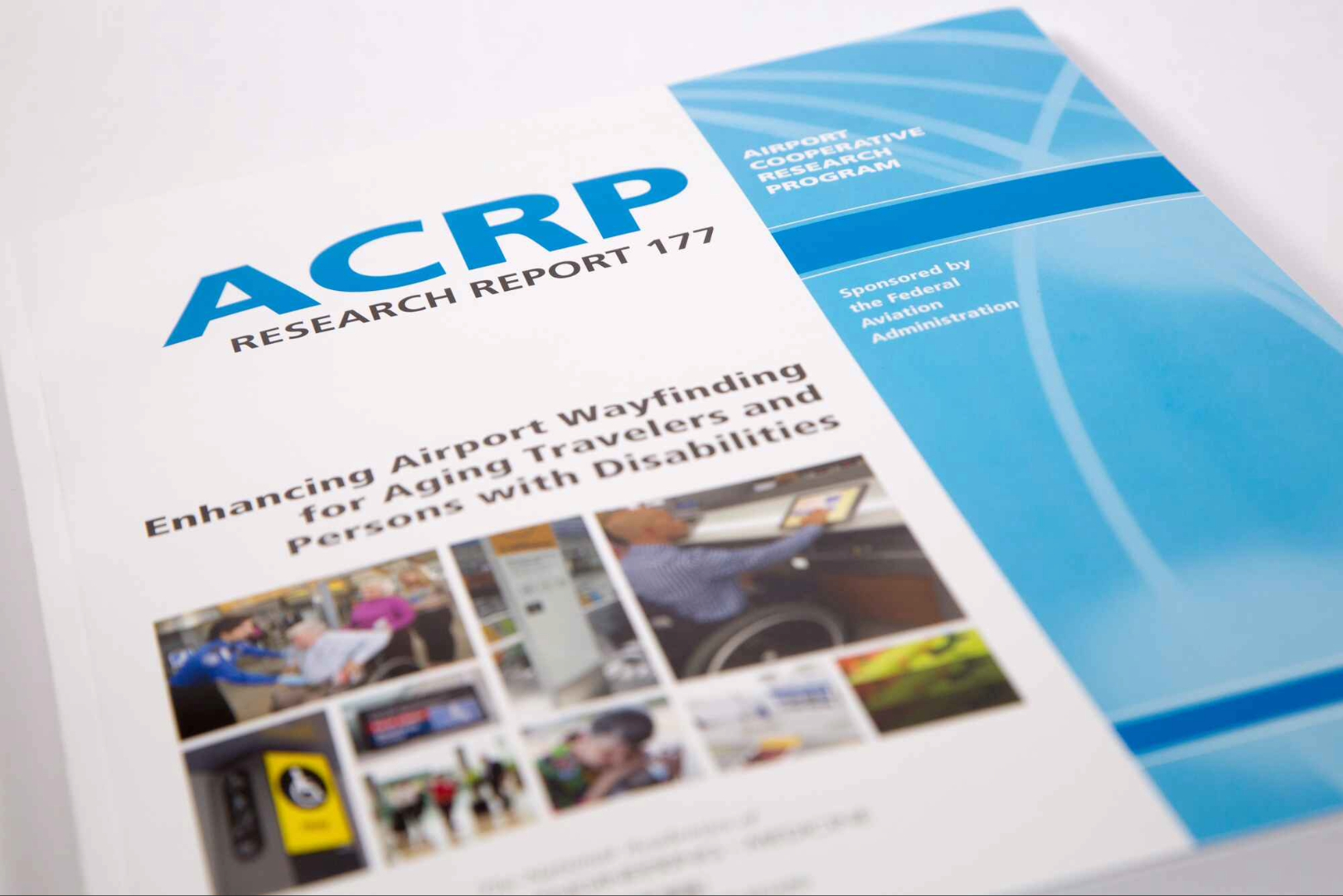
Through collaboration, we helped SLC add flight-information displays every 400 feet—doubling access to critical updates and giving passengers with mobility challenges greater confidence, clarity, and control. In high-pressure travel moments, clear information isn’t a perk; it’s what makes every journey equitable. That same commitment led the Airport Cooperative Research Program (ACRP) to select Gresham Smith to develop ACRP Research Report 177: Enhancing Airport Wayfinding for Aging Travelers and Persons with Disabilities—a practical, research-based guide helping airport operators and planners improve wayfinding so older adults and people with diverse abilities can travel independently. The guidebook introduces a first-of-its-kind Wayfinding Accessibility Audit Checklist and criteria for mobile apps, enabling airports and developers to create wayfinding tools that work effectively for people of all abilities.
People First, Always
When design anticipates human need, confidence follows. Airports are fundamentally human environments, and the best ones don’t demand attention; they simply work. When architecture, design and technology operate as one system, they reduce friction, support quick decision-making and make travel feel manageable.
That’s our focus at Gresham Smith: creating environments where movement feels intuitive and information stays consistent, even as operations shift. When airports are designed to guide people seamlessly, travel isn’t just smoother—it’s better for everyone.